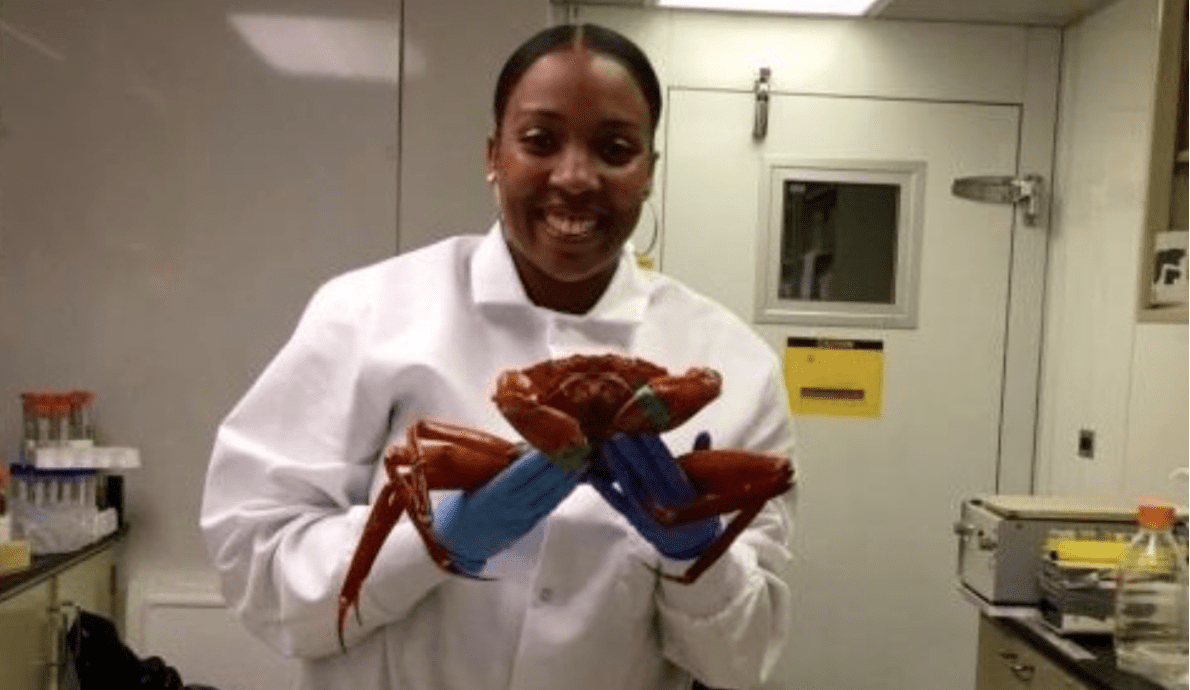

A simple Black girl from the South Bronx could never have dreamed she would one day become part of the National Oceanic and Atmospheric Administration (NOAA)—a federal agency within the U.S. Department of Commerce. But Shadaeisha Green’s story proves that such ambitious goals are not only possible to dream of, but are also entirely achievable. Read more on i-bronx.
Childhood in the Bronx
Shadaeisha grew up in a typical family in the Bronx, one of New York City’s least affluent and developed boroughs. The girl attended a regular high school and had never even traveled outside her neighborhood. As a child, Shadaeisha often visited Crotona Park, the largest park in the South Bronx, where she loved spending time by Indian Lake. It’s a large 3.3-acre body of water teeming with ducks, turtles, and various fish. She recalls, “If that park had swings, we kids would’ve moved in.”
“If that park had swings, we kids would’ve moved in.”
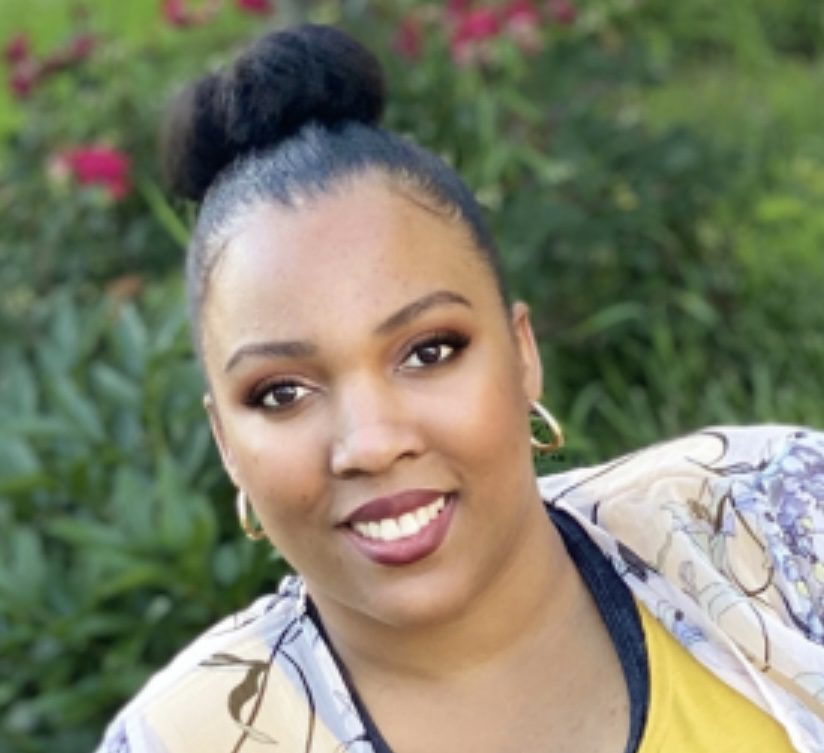
From a young age, Shadaeisha was fascinated by nature and the animal world, but she was most drawn to the water—it all seemed magical, like a fairy tale. In school, Shadaeisha was a good student, a member of the National Honor Society, and participated in various extracurricular activities, such as volunteering at a senior center. Still, she never thought about leaving her native Bronx. In her family, no one had ever attended college, and most of her high school’s graduates didn’t even consider entering higher education due to financial difficulties. Furthermore, University Heights High School, where the girl studied, didn’t have critical college preparatory programs like Advanced Placement or International Baccalaureate.

Despite this, her teachers encouraged Green to try applying and continuing her education, as they saw a talent for science and growth in the smart student.
Read about another nature researcher from the Bronx by following this link.
First Steps into the Unknown
It’s not known whether the shy and modest Shadaeisha would have dared to challenge the big scientific world if not for the support of her teachers, mentors, and parents. One day, her father gave her a brochure for a program that organized international summer trips for children. Understanding that his daughter might not have the courage to apply, her father filled out and submitted her documents himself, and together they got her first passport. That summer, Shadaeisha embarked on her first major journey to Sicily, Malta, and Paris.
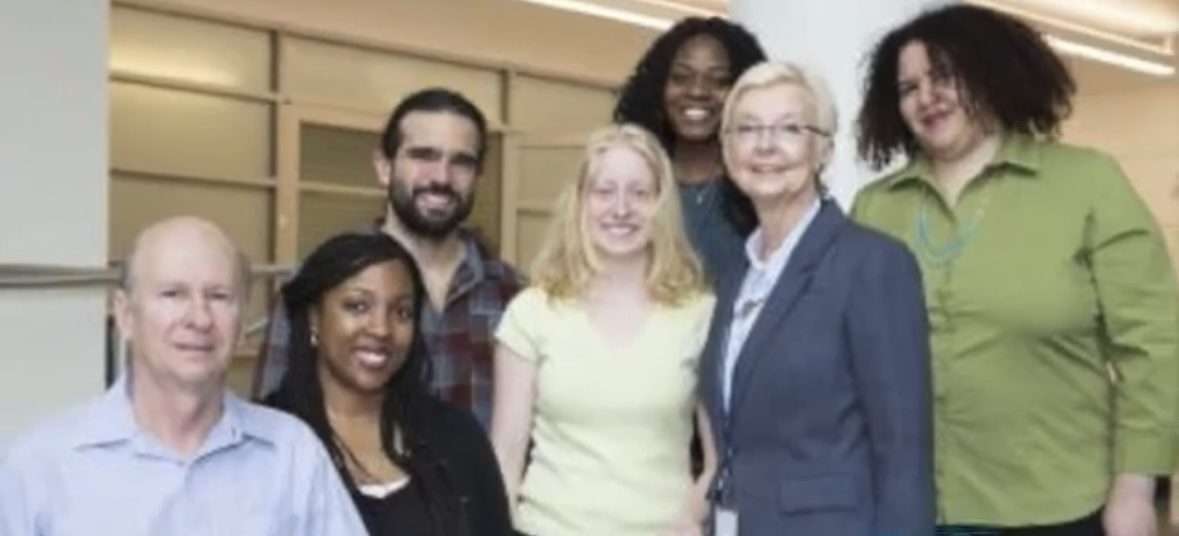
In her senior year, Green almost definitively decided that she wanted to be a teacher, until her chemistry teacher, Cynthia Laurent, suggested she choose a major from a college brochure. Shadaeisha thought about it and decided to choose environmental science. It should be noted that despite her love for nature, she didn’t like biology in school, because it was taught quite abstractly and required learning a lot of theory with almost no attention to practice. So, Shadaeisha thought there wouldn’t be too much biology in the environmental science major, and with the support of Cynthia Laurent, she began applying to relevant schools.
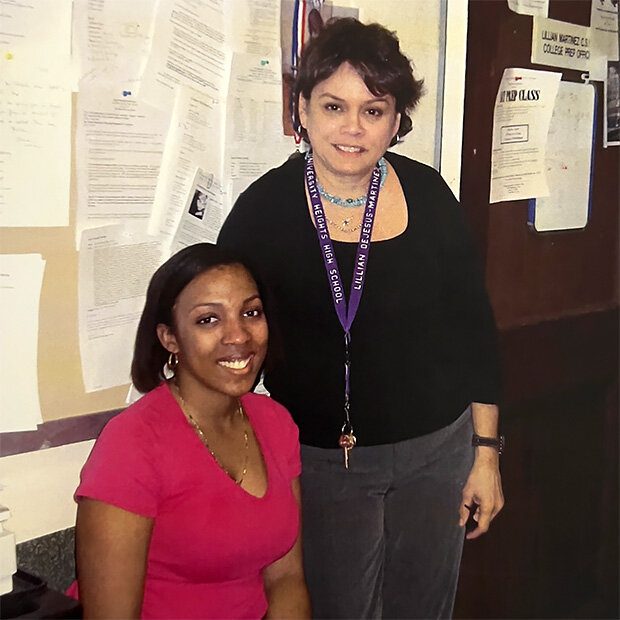
At this stage, her math teacher, Eric Jenkins, got involved, as he wanted as many of his students as possible to attend universities where a majority of students were Black, such as Hampton University. Her mother also dreamed of seeing her daughter within the walls of this legendary institution. So, Shadaeisha came to Hampton University’s Open House and applied on the spot.
Diving into the World of Science and Biology
At the university, Shadaeisha was immediately noticed by marine biologist Deidre Gibson, an experienced professor and mentor at Hampton. Gibson noted that Green’s academic performance was “good, but could be better.” But she saw that this student had significant potential, so she invited Shadaeisha to work in her lab, where the girl spent her time after class counting and identifying phytoplankton. She also learned to preserve biological samples and use a microscope.
It was at Gibson’s suggestion that Green was introduced to one of Hampton’s partners, the NOAA Cooperative Science Center, which opened up new opportunities for the talented student. The NOAA center prepared students for careers in marine science, research, and management. Thanks to the center, Shadaeisha received a scholarship for her work in Gibson’s lab. The summer after her sophomore year, she was invited to an internship at NOAA labs and was given the opportunity to participate in her first scientific conferences. That summer internship changed Green’s attitude toward biology, turning the science into a true passion. It was then that she met another important mentor—marine scientist J. Sook Chung, who would become her future PhD advisor.
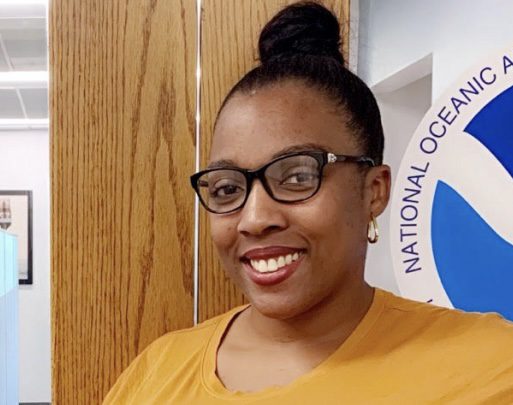
Once again, experienced educators supported the humble, insecure girl. Thanks to this support and their belief in her, Shadaeisha Green earned a bachelor’s degree in marine and environmental science at Hampton, and then was awarded a two-year LSAMP Bridge to Doctorate Fellowship Award and a graduate scholarship from NOAA.
Step by Step Toward a Big Goal
During her graduate studies, Shadaeisha focused on the hormonal biology of red deep-sea crabs. She noted that although this species is federally protected, there is a lack of information about its biology, particularly regarding reproduction and molting. Green said, “Studying hormones and their impact on reproduction is important for understanding the mechanisms that regulate ovarian development. This knowledge can be useful for researchers and government agencies, such as NOAA, who are engaged in fisheries management, meaning they set the rules, including the size of the catch.”
“Studying hormones and their impact on reproduction is important for understanding the mechanisms that regulate ovarian development. This knowledge can be useful for researchers and government agencies, such as NOAA, who are engaged in fisheries management, meaning they set the rules, including the size of the catch.”
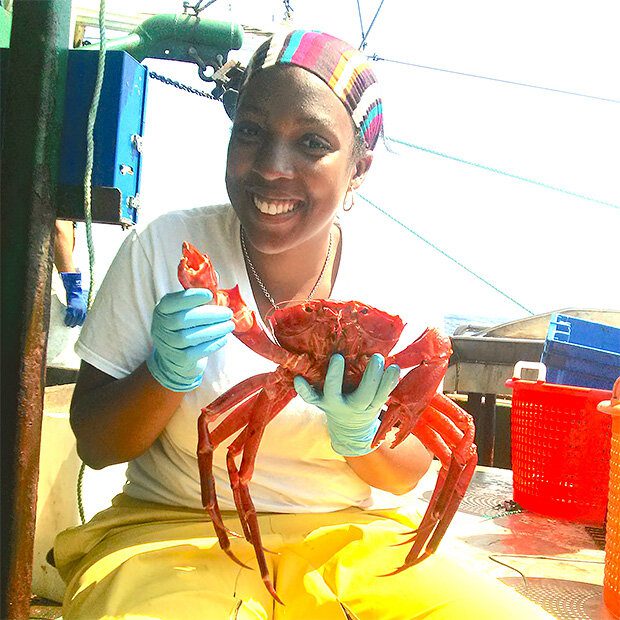
Shadaeisha’s biggest problem remained her panic-inducing fear of public speaking. It significantly hindered her development. She worked hard to improve her communication skills, but the key role in solving this problem was played by NOAA biologist Shavon Nesbitt. At an American Fisheries Society conference in 2019, Nesbitt introduced Green to three respected individuals and announced that Shadaeisha had prepared a stunning presentation. This was a huge challenge for Green, as she had previously avoided public speaking and opted for less visible formats, such as poster sessions. But thanks to the support of Nesbitt and other mentors, she gradually overcame her fear and began to speak confidently at conferences.
Her next victory was receiving the Knauss Fellowship from NOAA Sea Grant for 2021–2022, which allowed Shadaeisha to work in the NOAA Climate Program Office, where she focused on developing her communication skills. During the fellowship, Green participated in projects related to marine ecosystems and coastal flooding issues.
Shadaeisha always found time for science education, even while raising a child and pursuing her doctorate. Green also happily participated in all initiatives involving children. She once volunteered at the annual open house for the Institute of Marine and Environmental Technology, where she led activities for children and their families. She prepared interactive exercises, wearing a hat with crab eyes to attract the little ones’ attention and explain the importance of these organs in the hormonal system of crabs.
“It was very sweet to see the kids walking around in their crab hats. This is exactly what I was missing in school that would’ve helped me understand and love biology,” she recalled.
You can read an article about another professor from the Bronx by following this link.
Mentorship at NOAA and Beyond
Shadaeisha Green now works at the NOAA Office of Education as a program specialist for the Environmental Literacy Program. This program provides grants and support for initiatives that teach people how to use Earth system knowledge to improve ecosystem management and increase resilience to environmental threats. Shadaeisha uses her rich experience to contribute to the development of NOAA’s science education:
“I feel the need to give back what I’ve received and to help others, even if it’s just one person. I want to show that there are more opportunities than they can imagine.”

Green continues to visit the Bronx and has noticed changes in her old neighborhood over the years. One of her recent favorite events was speaking with students at University Heights High School, her alma mater. The meetings were focused on their questions about life outside the Bronx, what it’s like to be away from home, and returning after college.
“Many of the girls were so grateful that I shared my story,” Shadaeisha noted.
“They asked questions about finances and how to handle being away from home. It was great to talk to my school. They are so proud of my accomplishments. And if it wasn’t for the support of my teachers, I wouldn’t be where I am today.”