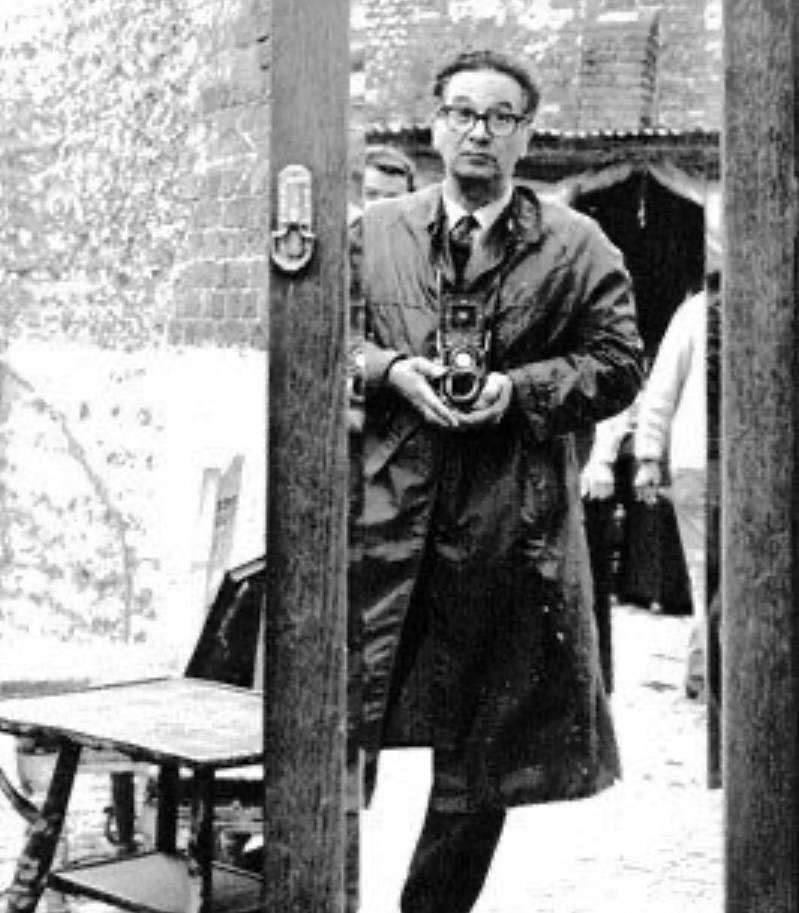

Jules Aarons was an American astrophysicist and a talented street photographer, known for his research on radio wave propagation and his vivid images of Boston urban life. His biography is a perfect example of how one can combine the world of hard science with a keen artistic vision. Read on to learn more about this creative individual and distinguished scientist on i-bronx.com.
From the Bronx to Paris
Jules Aarons was born in 1921 in the Bronx to a family where his father made a living in the garment industry. From an early age, he was drawn to knowledge, and in 1942, he graduated from the City College of New York with a Bachelor of Science degree.
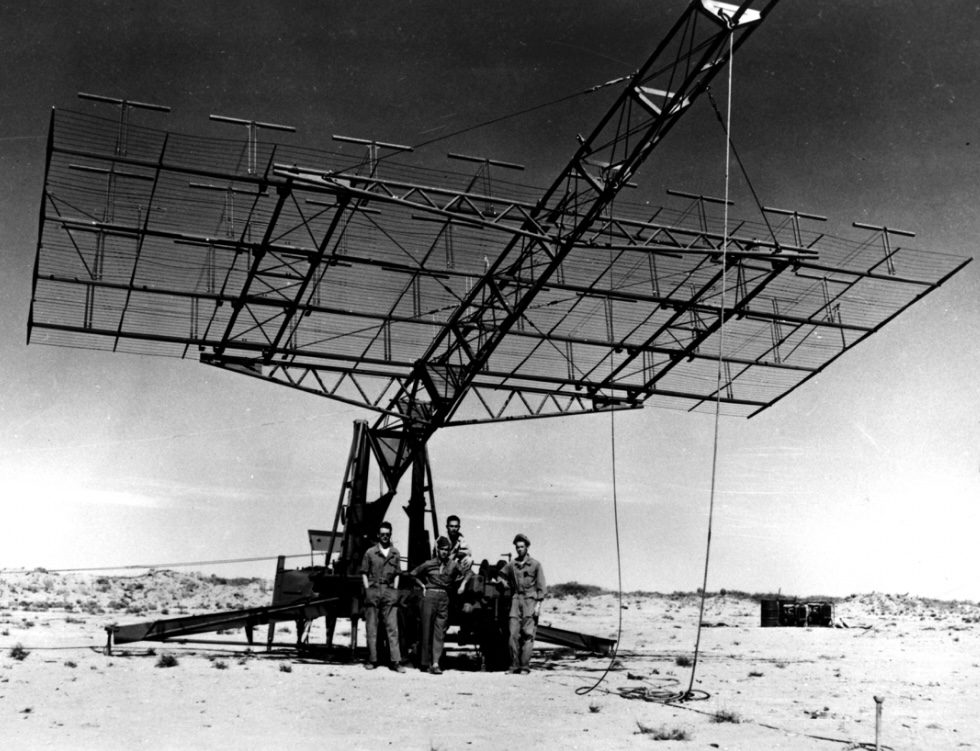
But World War II changed his life. From 1943 to 1945, Aarons served in the Signal Corps, working as a radio and radar officer in the Army Air Corps. There, amidst the noise of equipment and signals, he gained experience that would later grow into a scientific career.
After returning to civilian life, Aarons continued his studies at Boston University, where he earned a Master’s degree in physics in 1949. His talent and perseverance won him a prestigious Fulbright Scholarship, which opened the doors to the University of Paris. In 1953, he earned his doctorate there, blending American practicality with European academic depth.
With Physics at His Core
From the late 1940s until the early 1980s, Jules Aarons was one of the leading minds at the Air Force Geophysics Research Laboratory at Field in Bedford. There, he worked to make satellite and global communication more accurate and reliable. Aarons himself explained his scientific mission simply:
“Essentially, I was trying to understand the effects of the Earth’s atmosphere on radio waves.”
While studying in Paris, he formed close contacts with European colleagues, and in 1957, he spearheaded the creation of the Joint Satellite Studies Group—an international circle of scientists who studied how the atmosphere affects satellite signals. This initiative later evolved into the Beacon Satellite Studies Group (BSS), which still meets twice a year in different parts of the world. It was thanks to his persistence that numerous ionospheric monitoring stations were established—key points that later helped the Air Force develop modern space communication and navigation systems.
Sunanda Basu of the National Science Foundation called him a “pioneer in beacon satellite ionospheric research” and acknowledged that his name became synonymous with the field of ionospheric scintillation.
In 1981, after retiring from the Air Force, Aarons joined Boston University as a research professor in the Department of Astronomy. Here, he continued to study how magnetic storms affect the ionosphere in equatorial and polar regions, using modern GPS satellites. In 1987, he co-founded the University’s Center for Space Physics. From 1980 to 1983, Jules Aarons also chaired the Commission on Ionospheric Radio Wave Propagation of the International Union of Radio Science.
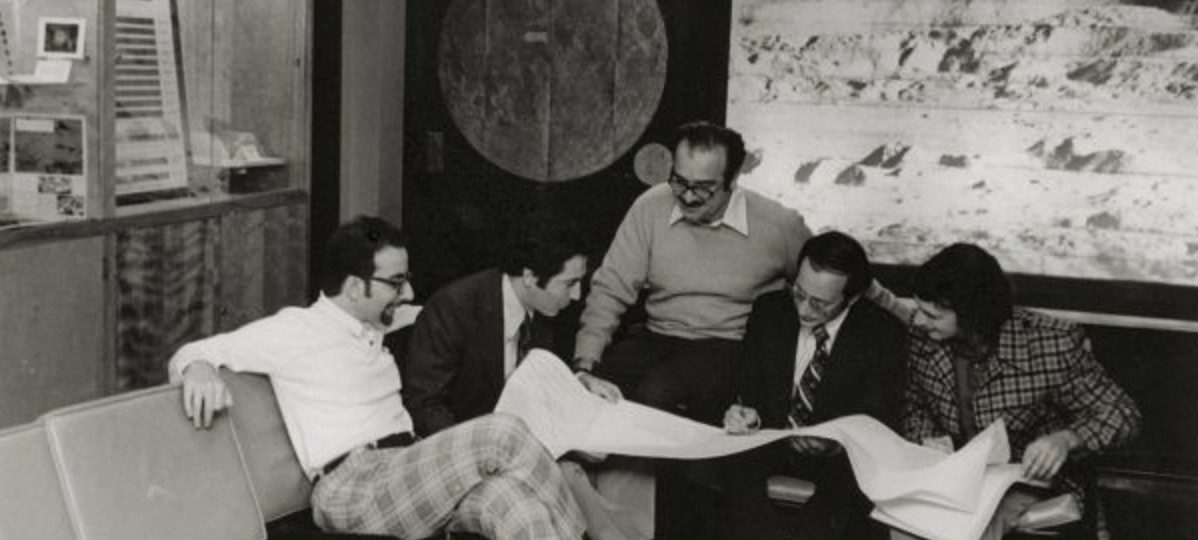
Colleagues remember him not only as a brilliant scientist but also as an extraordinarily simple and kind person. Professor Michael Mendillo recounted how they would have coffee and pastries at his home, and Aarons would comfortably doze off after lunch, never trying to impress those around him.
“He knew he was an accomplished man, but he never talked about himself,” Mendillo recalled.
A Photographer at Heart
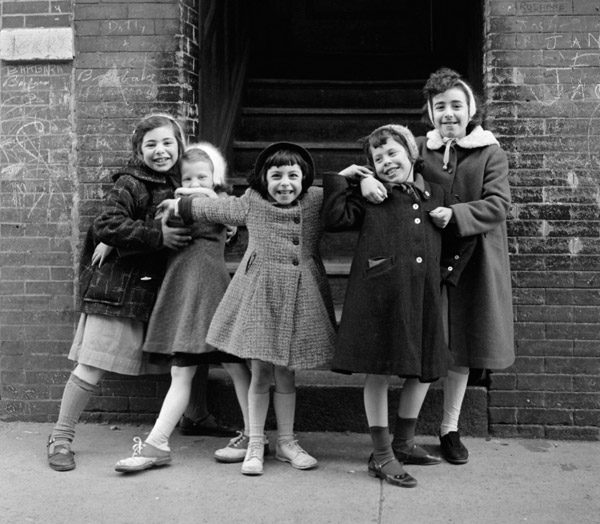
Simultaneously with his scientific work, Aarons remained a passionate photographer. Street photography became a way for him to relax from his intense work, as well as a means to preserve the memory of the urban communities he loved and respected. Aarons’s photographs are vivid records of life in Boston’s working-class neighborhoods from the late 1940s to the 1970s, especially the West End and North End. These areas were ethnically diverse, filled with Italian, Jewish, and African American families, and he saw a richness in their everyday lives and cultural identity.

Unlike many of his contemporaries who focused on dramatic and tragic stories of the oppressed, Aarons chose a different approach. He wanted to convey the beauty of the ordinary, the quiet dignity, and the cheerfulness of simple people. His photographs are snapshots of happy, sometimes even dramatically posed, residents who proudly present themselves within their social and cultural environments. Jules used a twin-lens reflex camera, which allowed him to photograph discreetly from waist level, without interfering with the naturalness of the moment.
Aarons’s immense attention to printing his photographs became another distinguishing feature of his work. He didn’t just take pictures—he poured his soul into the developing and printing process, creating true works of art. For him, it was a way to complete the story started by the camera, to convey the atmosphere and depth of a scene, and to show every detail with the utmost care.
During the mass demolition of the West End as part of urban renewal, his photographs became invaluable historical documents, preserving images of the vanished neighborhood for future generations. After this, Aarons focused on the North End, documenting social scenes, religious events, and people of all ages and social statuses there.
However, by the 1980s, Jules stopped taking photographs, partly due to an allergy to chemicals and a growing distrust of street photographers.
Honors and Awards
Throughout his career, Jules Aarons accumulated an impressive array of awards and honors that reflect the scale of his contributions to the world of science. These include: the Air Force Award for Exceptional Civilian Service, the Townsend Harris Medal from the City College of New York, the Günther Lenser Memorial Award in 1964, and the Harry Diamond Memorial Award from the IEEE (Institute of Electrical and Electronics Engineers).
His recognition in scientific circles was undeniable. In 1975, Aarons became a Fellow of the IEEE. Additionally, he was actively involved in international scientific cooperation: he chaired the AGARD-NATO Electromagnetic Wave Propagation Group (1979-1981) and the Commission on Ionospheric Radio Wave Propagation of the International Union of Radio Science (1980-1983). In 1996, the scientist received the prestigious Appleton Lecturer Award from the IEEE.
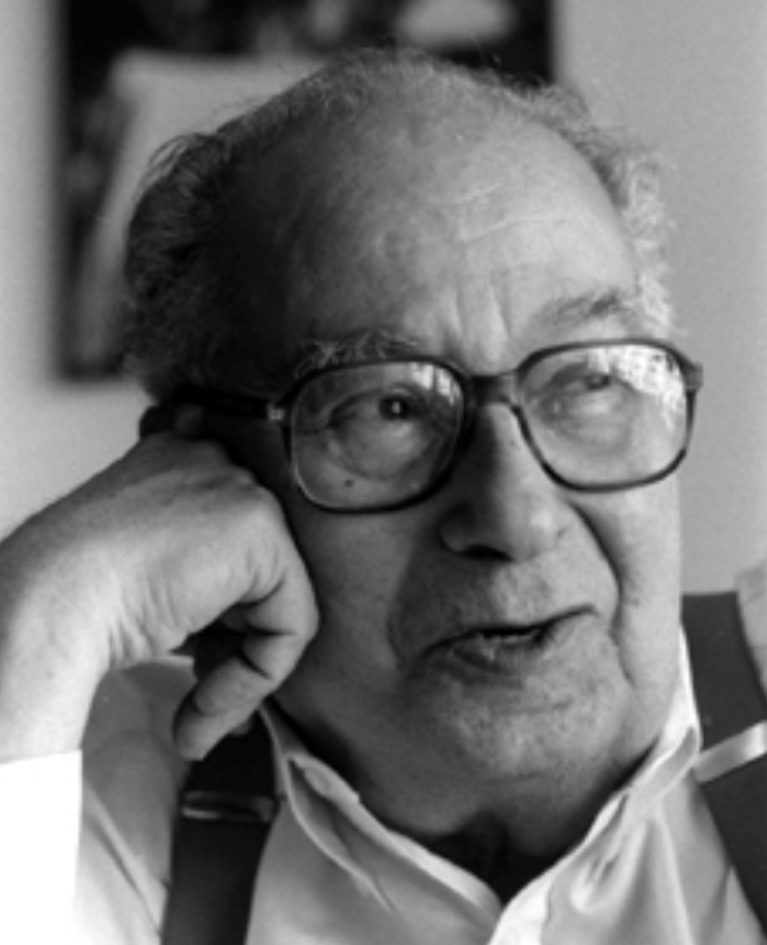
His scientific legacy includes not only articles but also fundamental books and collections. As an editor, Jules Aarons wrote “Radio Astronomical and Satellite Studies of the Atmosphere” (1963), which became an important reference for scientists. As an author, he left behind several significant publications, including:
- “Radio Astronomy of the Solar System”—lectures given at the NATO Advanced Study Institute (1965);
- “High Latitude Models, Observations, and Analysis of Ionospheric Scintillation” (1973);
- “The Effects of Magnetic Storm Phases on F-Layer Irregularities from Auroral to Equatorial Latitudes” (1989).
Jules Aarons’s works are still cited today in research on space physics and radio science, and his accolades remind us that, above all, he was not just a scientist but a leader who paved the way for others.
A Remarkable Man
Jules Aarons was a man who lived his entire life at the intersection of two worlds: the scientific and the artistic. By day, he was an astrophysicist unraveling the mysteries of space and investigating complex phenomena related to radio wave propagation. By night, his hands created art in the darkroom, transforming simple snapshots into genuine masterpieces.
In 1944, Jules married Jeanette Lampert, with whom he spent his entire life. The couple had two sons—Philip and Herbert—and three grandchildren. His family’s warmth was an important part of his life, and their cozy home in Newton became the place where he spent his final years.
This remarkable man passed away on November 21, 2008, at the age of 87.
Jules Aarons’s life is a unique example of the harmonious combination of hard science and art. He not only contributed to the development of fundamental technologies in space physics but also left a deep cultural mark as a humanistic photographer who managed to capture the soul of urban communities during a period of significant social change.
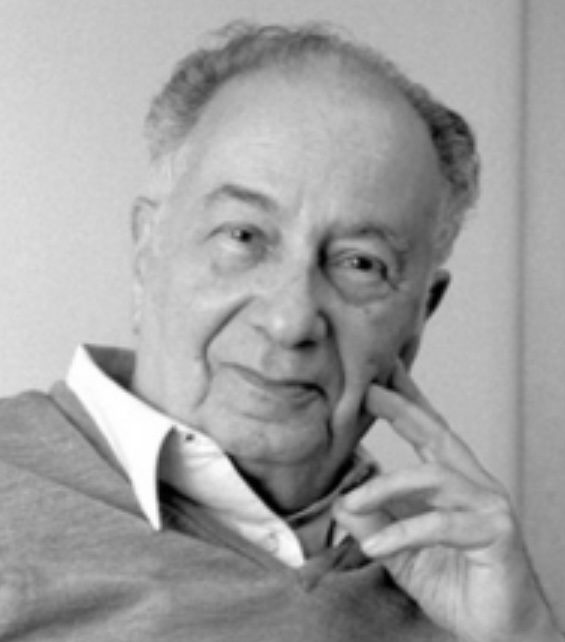
His works have been exhibited in leading museums and libraries around the world—from the Museum of Modern Art in New York to the National Library of France—and remain a valuable legacy that tells the story of mid-20th-century America through the lens of humanity and science