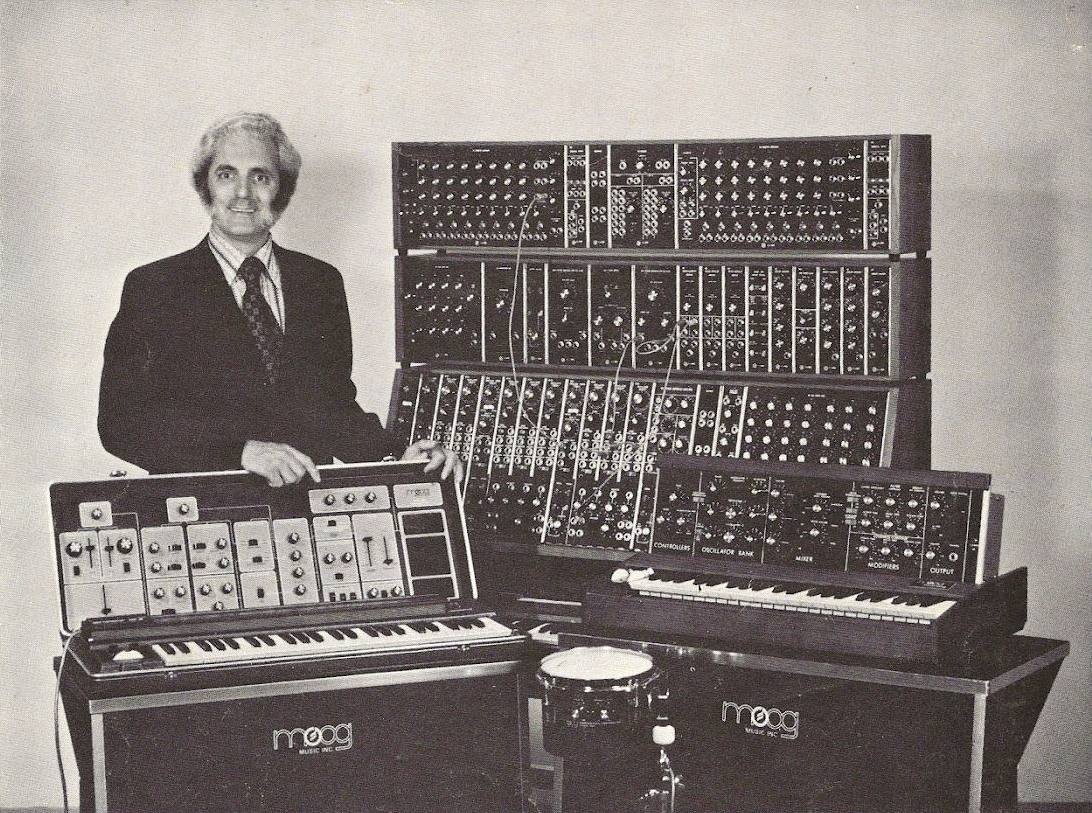

For over half a century, Robert Moog remained one of the leading innovators in electronic music. In 1964, he created the Moog synthesizer, which became a true revolution in nearly every musical genre, opening up new avenues for creative expression. For many artists, this invention was a turning point in their careers. Let’s take a closer look at the life and career of this musical inventor on i-bronx.com.
The Young Electronics Enthusiast
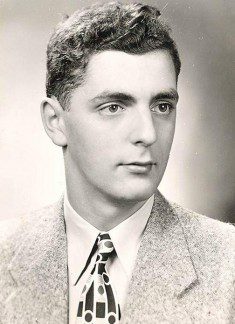
Robert Moog was born on May 23, 1934, in Flushing, Queens. His father, George Conrad Moog, was an engineer at Consolidated Edison, and his mother, Shirley Jacobs, was insistent on her son learning music, seating him at the piano even when he wanted to play with other things.
From childhood, Robert showed an unusual passion for his age—he was drawn to electronics. While other boys rode bikes and played cowboys, he spent hours in the garage, taking apart and reassembling strange devices with his father. Their trips to Manhattan’s legendary Radio Row felt like expeditions to a land of limitless technical possibilities. The shelves were filled with components just waiting to be turned into something new.
To develop his technical knowledge, Moog attended the Bronx High School of Science, earned a bachelor’s degree in physics from Queens College, and an engineering degree from Columbia University. He completed his academic journey with a doctorate in engineering physics from Cornell, laying a solid scientific foundation for future musical revolutions.
First Musical Love: The Theremin
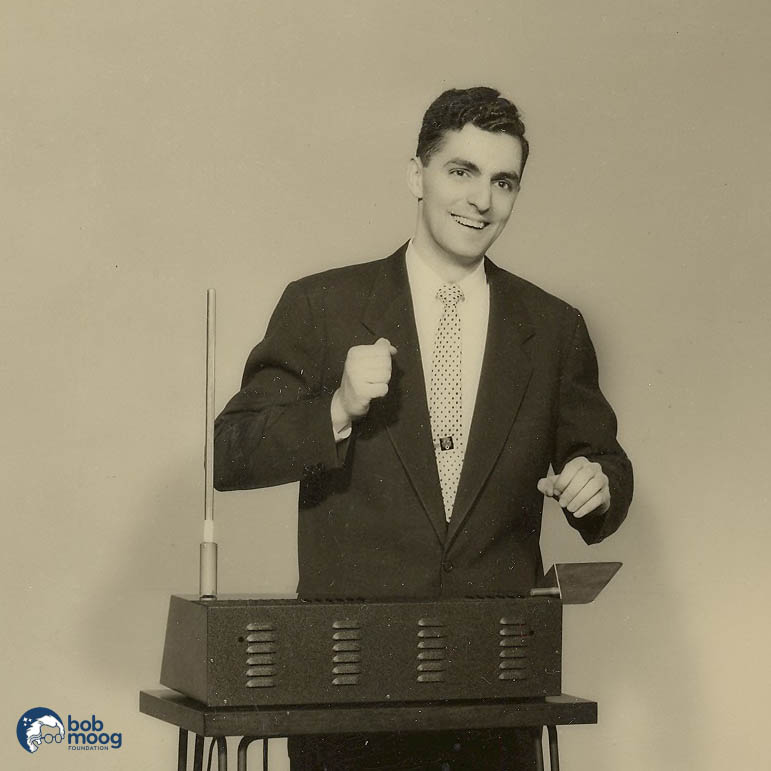
One day, Robert came across the blueprints for a theremin—a mysterious instrument that made sound without being touched. He was so captivated by the idea that at age 14, he built his first model himself. It was then that his love for music and engineering merged into one. The theremin looked like a modest wooden box, but it was large and difficult to play, which caused its popularity to wane quickly. Yet Moog remained loyal to it.
While in college, he continued his experiments with the theremin, and in 1953, he created his own version of the instrument. The following year, Robert published an article about it in Radio and Television News magazine and founded R.A. Moog Co., which manufactured and sold theremin kits, shipping them by mail directly from his parents’ home.
His design skills quickly attracted attention. In 1956, he and his father visited the Manhattan lab of composer and inventor Raymond Scott. Scott bought a Moog Model 305 theremin from Moog and even modified it into a keyboard instrument called the Clavivox.
In 1958, Moog married and continued building theremins in his own home in Ithaca. He developed his business alongside his graduate studies. By 1963, the company had moved into its first commercial space in Trumansburg, New York. It was from these garage and home workshops that the path began, which would eventually lead to the creation of the legendary Moog synthesizer.
Robert Moog’s Main Invention
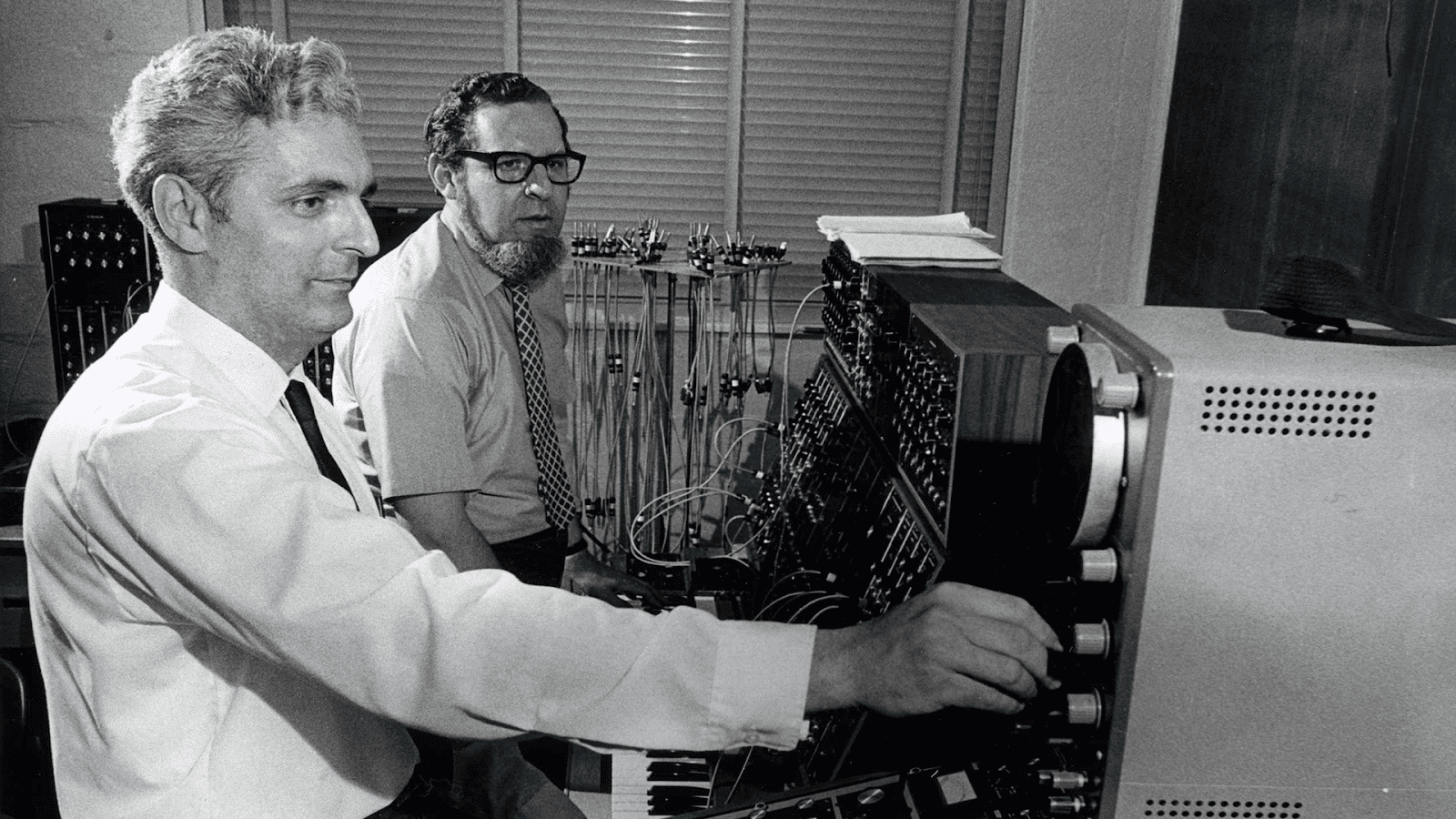
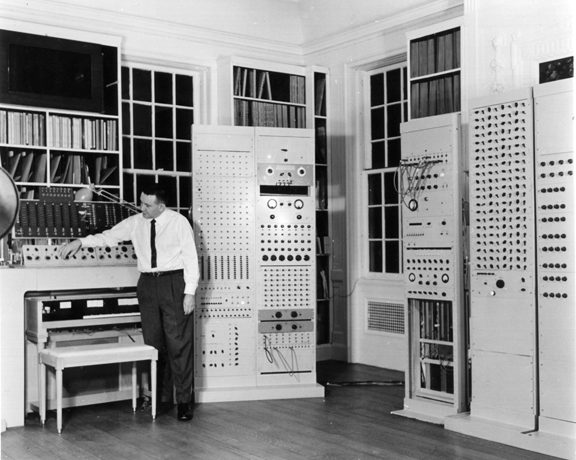
While studying at Cornell University, Robert Moog, along with composer Herb Deutsch, began creating the first components of his synthesizer. At the time, synthesizers were cumbersome devices that took up entire rooms, so Moog aimed to make an instrument that was more compact and accessible to musicians. He designed a modular synthesizer in which separate blocks for sound generation and processing were connected with patch cables. Instead of the vacuum tubes used in previous models like the RCA Mark II, he used silicon transistors, and created voltage-controlled oscillators and amplifiers.
The Moog synthesizer was first introduced at the 1964 Audio Engineering Society conference in New York. It was several times smaller and significantly cheaper than its competitors, programmed with knobs and cables, and featured a keyboard, which made it appealing to musicians. In collaboration with various artists, including Herb Deutsch, Vladimir Ussachevsky, and Wendy Carlos, Moog refined the instrument, adding, notably, the Moog filter and ADSR envelope, which later became a standard in synthesizers.
In 1970, the portable Minimoog was released—one of the most famous and influential synthesizers in history. After the release of Wendy Carlos’s album Switched-On Bach, which was recorded entirely on a Moog, the instrument became popular among global stars such as The Beatles, Mick Jagger, and Sun Ra. Moog synthesizers began appearing not just in studios but also on concert stages, and their sounds were featured in popular music, films, and even home appliances.
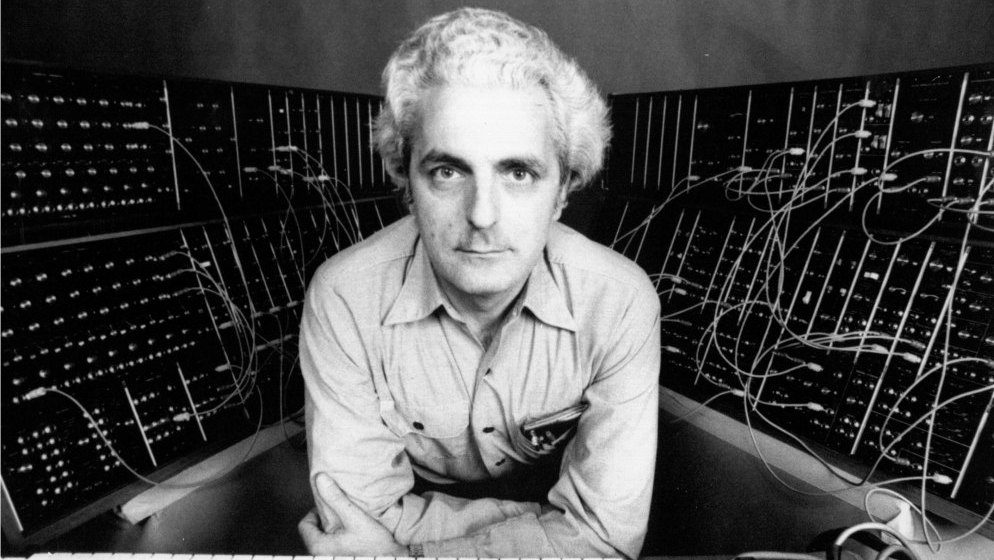
Colleagues called Robert Moog one of the most important creators of musical instruments in history. His inventions ushered in a new era in sonic art, making electronic music accessible and vibrant, and the compact Minimoog became a symbol of the synthesizer’s transition from labs to the hands of performers.
A Genius, but Not an Ambitious Businessman
Robert Moog was a person who trusted his circuit diagrams more than his financial reports. His synthesizers captivated musicians worldwide, but he himself never aspired to be a business tycoon. Moog admitted that he developed instruments more as a hobby than a commercial project, and he compared his own journey in business to a ride at an amusement park:
“You know you’re not going to get too badly hurt because nobody would let you, but you’re not quite in control.”
His only patent was for the design of the transistor ladder filter. He left other innovative ideas—the modular architecture, envelope generators, and voltage control—in the public domain. This decision cost him potential millions, but it might be precisely what allowed the synthesizer industry to flourish.
In 1971, Moog Music came under the control of Norlin Musical Instruments. Robert remained the chief designer until 1977, after which he decided to start with a clean slate. In 1978, he moved to North Carolina and founded Big Briar, a small workshop for electronic instruments. He later worked at Kurzweil Music Systems and, in the early 1990s, taught at the University of North Carolina in Asheville.
The year 2002 marked a symbolic return for him. Moog bought back the rights to his own name and transformed Big Briar back into Moog Music. Until his last days, he remained dedicated to his craft, developing new instruments, including a touch-sensitive piano, and pouring into them not so much business calculation as a love for sound.
Personal Life and Recognition
Bob Moog left behind not just instruments but an entire cultural legacy. In his lifetime, he received numerous honors, from the Silver Medal of the Audio Engineering Society to the prestigious SEAMUS award, honorary doctorates, and two Grammy Awards for lifetime and technical achievements. In 2001, Robert Moog received the Polar Music Prize, and in 2013, his name was inducted into the National Inventors Hall of Fame.
Every year, a festival of electronic music and innovation called Moogfest is held in honor of the famous synthesizer inventor. In 2012, Google even created an interactive version of the Minimoog as a Doodle for his birthday.
Moog’s life was also full of personal events. In 1958, he married Shirley May Lee, with whom he had four children, but the couple divorced in 1994. His second wife was Ileana Grams. In April 2005, Robert was diagnosed with glioblastoma, and on August 21 of that same year, he passed away at the age of 71, leaving behind his wife, children, a stepdaughter, and five grandchildren.
Robert Moog’s legacy continues to live on not only in sounds but also in places of remembrance. In Asheville, the Moogseum opened in 2019—a museum with rare theremins, prototype synthesizer modules, and archival materials. A documentary film, Moog, was made about Robert in 2004, and books were written about him, including Analog Days: The Invention and Impact of the Moog Synthesizer by Trevor Pinch and Frank Trocco, as well as the 2023 biography, Switched On: Bob Moog and the Synthesizer Revolution by Albert Glinsky.
Robert Moog was a man who not only created instruments but also changed how the world listens to music. And that sound will echo for a long time.