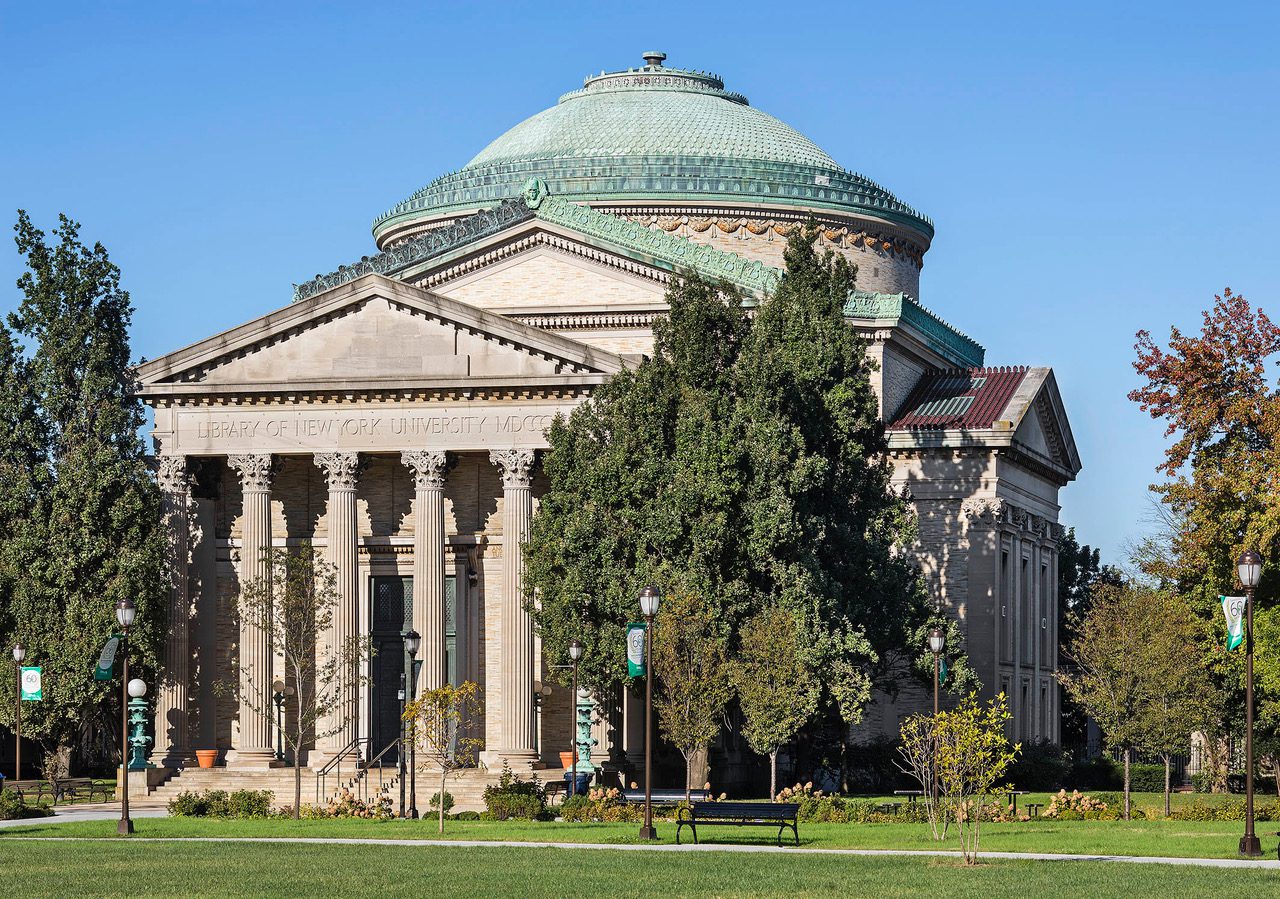

It’s a prominent New York City landmark, an architectural masterpiece, and a work of art. It’s where the city’s educational elite gathered, movies were filmed, and awards ceremonies were held. And it’s not a palace or a theater. It’s all about a simple university library. In this article on i-bronx, we’ll tell you about its history and unique design.
History of the Library’s Founding
New York University, which remained a small institution with fewer than a hundred students for its first 50 years, was founded in 1831 and was initially located in Manhattan. But as the area became more commercial, the educational institution in the middle of a street of shops and large storefronts became an architectural hindrance. In 1890, Vice Chancellor Henry MacCracken began looking for a new location for the university. He found it in the Bronx when he saw the Mali estate. The large adjacent land allowed for additional buildings to be constructed next to the mansion.
In January 1892, MacCracken approached architect Stanford White with a proposal to design a new campus. White’s plan included science and language lecture halls, a library, a chapel, and dormitories.
Construction on the new campus began in April 1894, and the first building to be completed was Language Hall. In May 1895, the university received an anonymous gift of $250,000 for the construction of a central building that would house a library, a museum, and administrative offices. It was only a few years later that the benefactor was revealed to be Helen Miller Shepard, the daughter of Jay Gould, in whose honor the university library was named.
Architectural Features
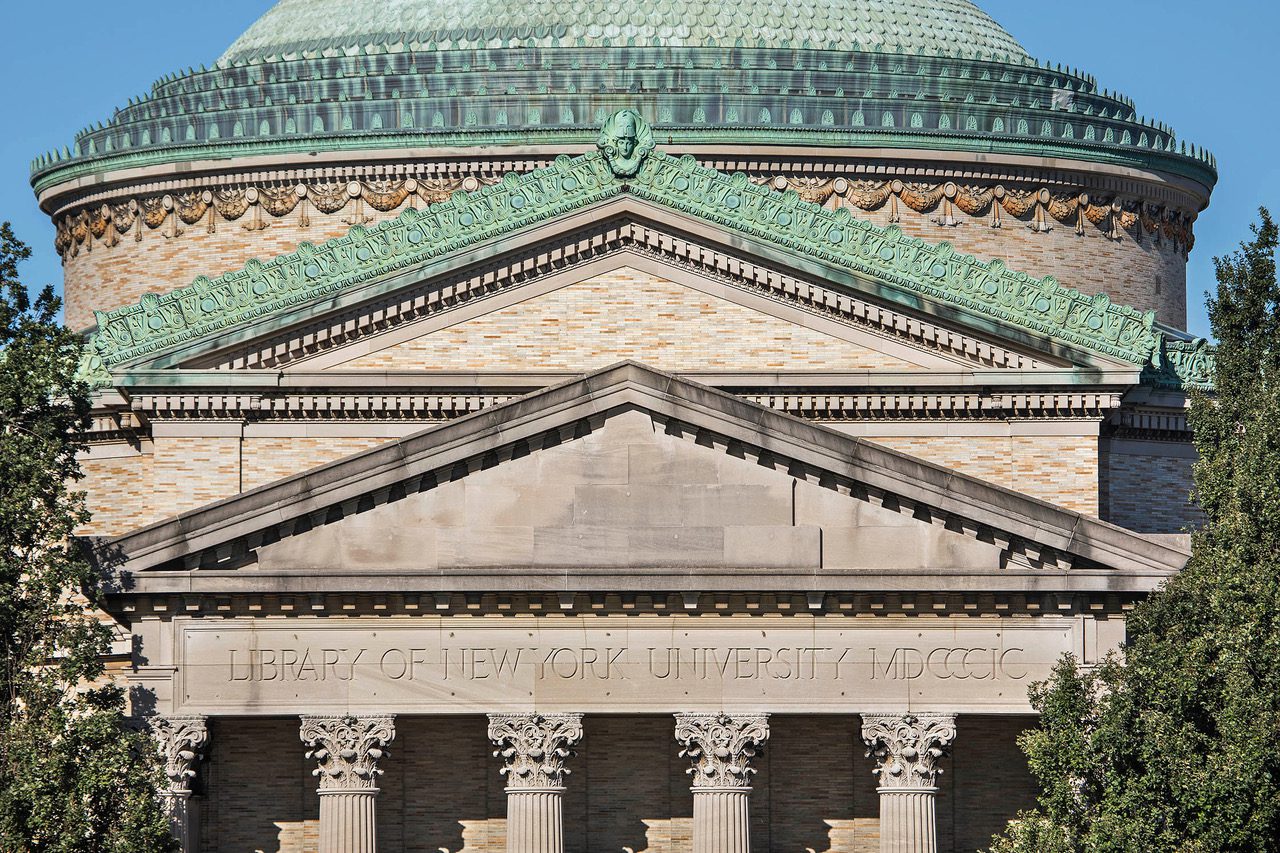
The library building is shaped like a Greek cross, a design also used in the Low Memorial Library. Those who see the building for the first time are often surprised that it’s just a library, as it looks very monumental, more like a theater or a temple.
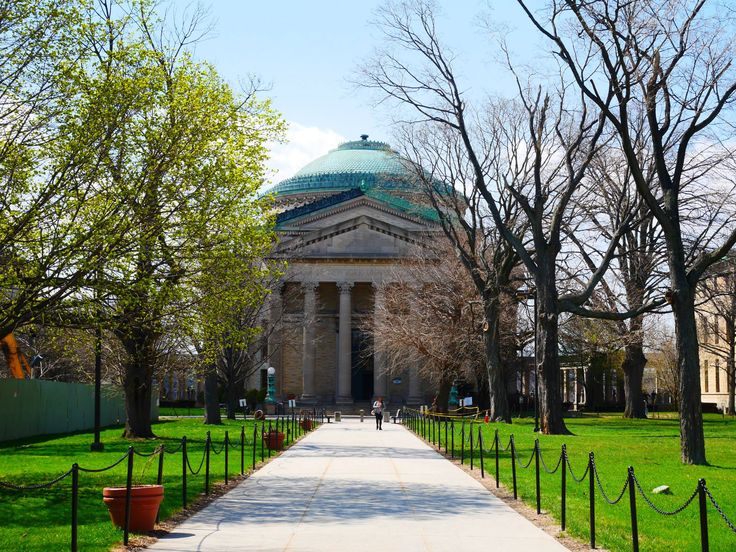
The eastern facade is adorned with a portico of Corinthian columns made of Indiana sandstone. The walls are faced with limestone, accented with pink granite and soft red copper. The main entrance features massive bronze doors, designed in 1921 by White’s son, Lawrence Grant White. These doors consist of eight relief panels created by six sculptors.
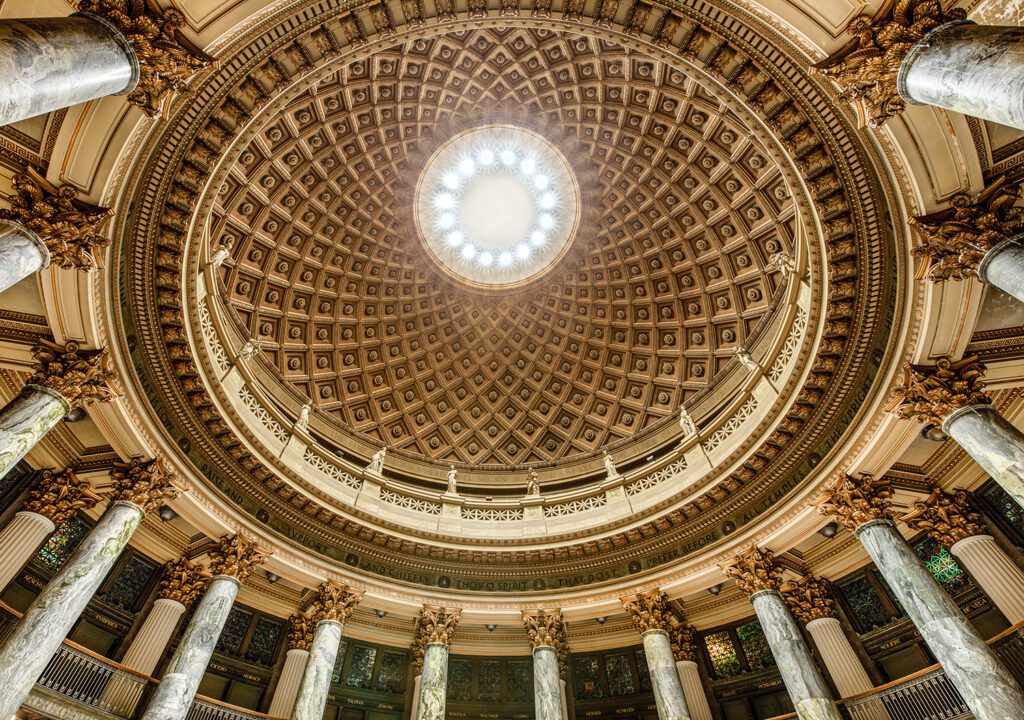
The other three facades are made of Roman red brick and framed by limestone pilasters. The library is topped with a large dome featuring a composite frieze and covered with copper tiles. The lower part of the dome is divided into several tiers, and decorative elements in the antique style are placed around the oculus.
The Interior
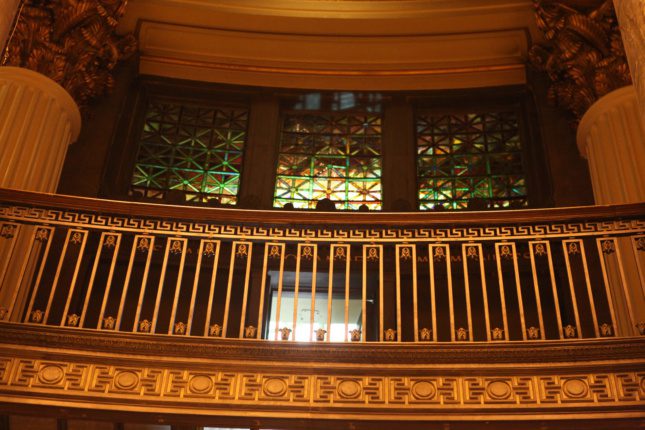
The library’s interior is no less impressive than its exterior. It features bronze lamps, a domed ceiling, vibrant stained-glass windows, and mosaics of red, yellow, white, and black tiles.
The main staircase, made from marble specially brought in from Tennessee, leads to the reading room. Its design was inspired by the incredible Golden Staircase of the Doge’s Palace in Italy. The stairs represent a kind of ascent to knowledge, as the reading room is not visible until the visitor reaches the top.
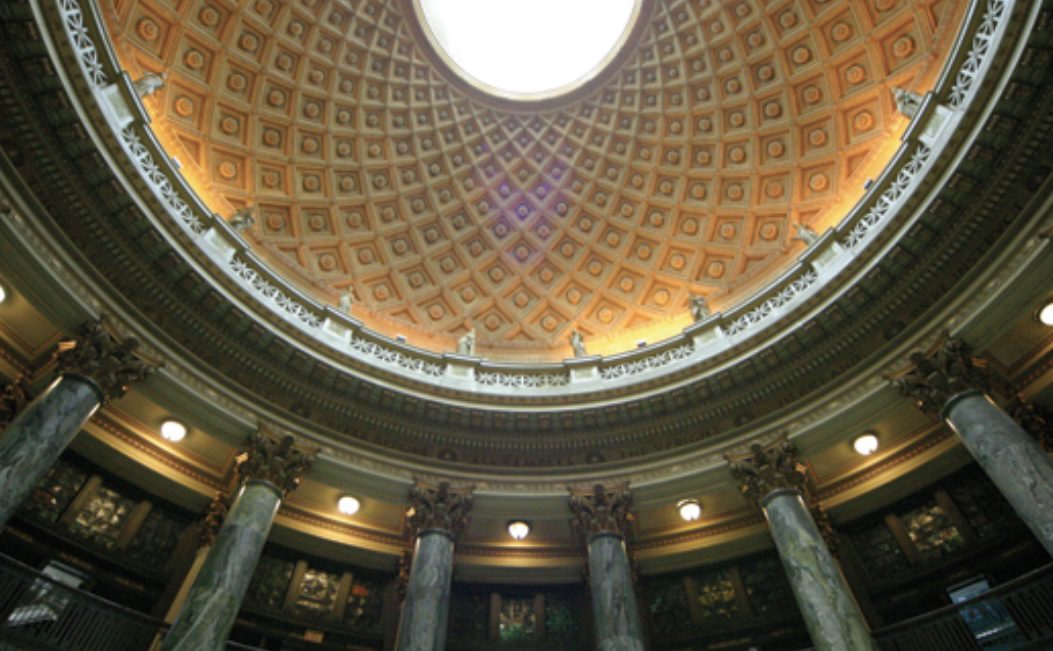
The walls are paneled with Portland stone two-thirds of the way up, and the upper section is decorated with a frieze and pale yellow marble panels. The side lighting comes from bronze torches on stone pilasters with glass globes. There are also lunette openings with niches for busts above almost all the interior doors.
A highlight of the interior was a large green Tiffany glass circle on the domed ceiling, but it was later covered up.
The Reading Room
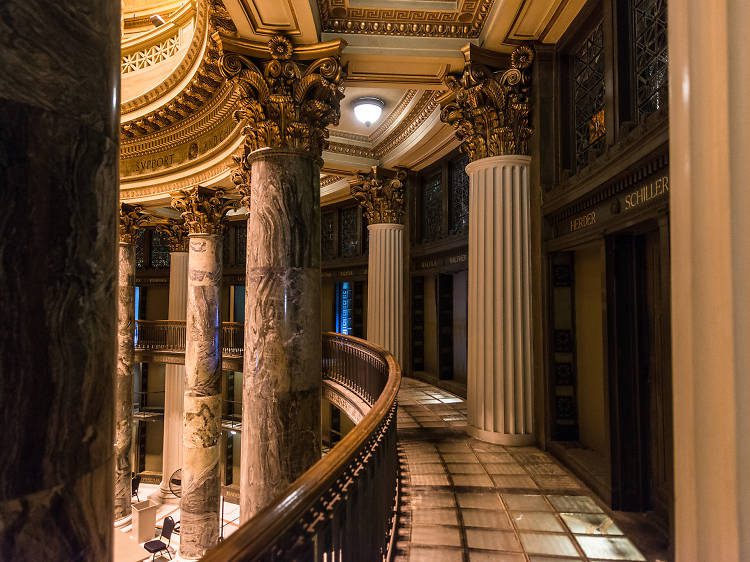
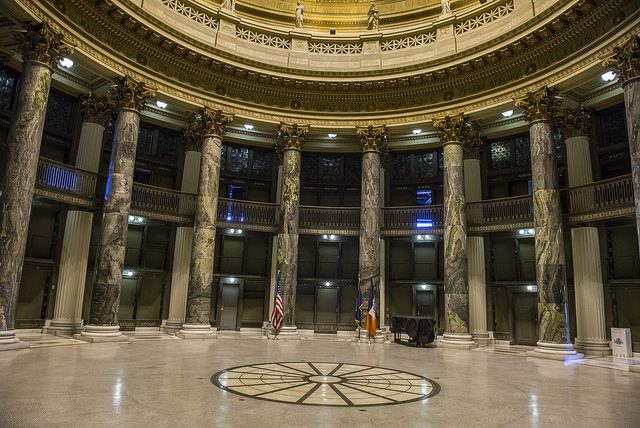
The central part of the Gould Library is a circular reading room. The atmosphere here is truly magical, reminiscent of Hogwarts. It features a towering colonnade of 16 Corinthian columns paired with inner columns of green Connemara marble, an Italian mosaic floor, wide balconies, and large windows. The walls have special deep, three-tiered niches with shelves 2.3 meters high (each divided into three sections).
Here, you can simply walk around and admire every corner. The names of scholars are carved into the walls, vibrant Tiffany stained-glass windows shimmer, and the high dome with an oculus in the center gives a sense of space and grandeur.
The reading room was equipped with white designer furniture, which, unfortunately, has not been preserved. In the center of the room stood a round table with 24 seats, as well as 8 long and 8 short tables, providing a total of 120 seats.
The fourth-level balcony features a separate exhibition. The plaster balustrade with openwork decor holds 16 pedestals with exquisite glass mosaics. On them stand statues of female figures symbolizing the muses of learning.
The library’s collection received a gift of 8,000 German-language books from an anonymous benefactor, and another 3,000 volumes in Italian were donated by former NYU philosophy professor Vincenzo Botta. At the time of its opening, the library held a total of 61,000 books.
Other Library Rooms
In addition to the large reading room, the Gould Library has 18 seminar rooms. The first floor was home to the history and philosophy departments, the second to the language departments, and the third to the seminar rooms for the mathematics, science, engineering, and arts faculties.
There were also several administrative offices. Some of them had exquisite and prestigious designs. The librarian’s office used mahogany, while the chancellor’s room had an oiled maple floor and San Domingo mahogany wainscoting. The second floor had two rooms for cataloging, and the third floor had halls for periodicals and newspapers.
The library was always warm and dry. In the basement, along with the heating system, large fans ensured air circulation throughout the building via chimneys on each floor.
Almost the entire lower floor is taken up by a large, spacious auditorium with 600 seats. Initially, it was a chapel, and later it was often used for various events: meetings, exhibitions, and presentations. At the library’s opening, a theater organ was even installed in this auditorium on a makeshift stage, and chairs were arranged in a circle, creating an amphitheater atmosphere. The auditorium was designed to be adaptable for other needs. After a fire in 1969, Marcel Breuer redesigned it in the Brutalist style.
From Grand Opening to Closure
In 1901, the Gould Library officially opened. In addition to its primary purpose, it was also frequently used for holding ceremonies, concerts, student awards, graduation ceremonies, and more.
In the late 1910s, New York University approved a plan to create the Hall of American Artists in the Gould Library, where busts of prominent artists were installed.
The Gould Library was a hub of culture, science, and art not only for the university but for the entire New York community. It was one of the most sought-after places to hold exhibitions or competitions. In 1950, a museum of James Arthur’s clocks even opened in the library’s basement, operating there for at least ten years. The library’s holdings grew rapidly each year, so by the 1950s, it could no longer hold all of the university’s collections, and new libraries were built. They were focused more on scientific and educational work, while the Gould Library remained the main venue for important events and ceremonies.
In 1961, $1 million was allocated for the library’s renovation. In 1966, the library’s exterior was designated a city landmark. But in 1969, a major fire occurred, the result of an arson attack during student protests. The first floor, with the main auditorium, was the most affected.
In 1973, for $62 million, the Gould Library was transferred to Bronx Community College, which moved to the new campus in September. However, the college did not use the building as a library, as the organization of the book collections was inefficient, but the auditorium remained available for meetings. The reading room was rarely used, mostly for parties and other events. In 1979, the Gould Library was added to the National Register of Historic Places, and in 1981, its interior was designated a New York City landmark. In the late 20th century, the library began to decline. Its upkeep was financed by grants and payments from filmmakers who used the space for filming.
Restoration of the library began in 2020. Work on the dome and oculus was completed in May 2023 at a cost of $18.3 million, and a new staircase was added for $2 million.