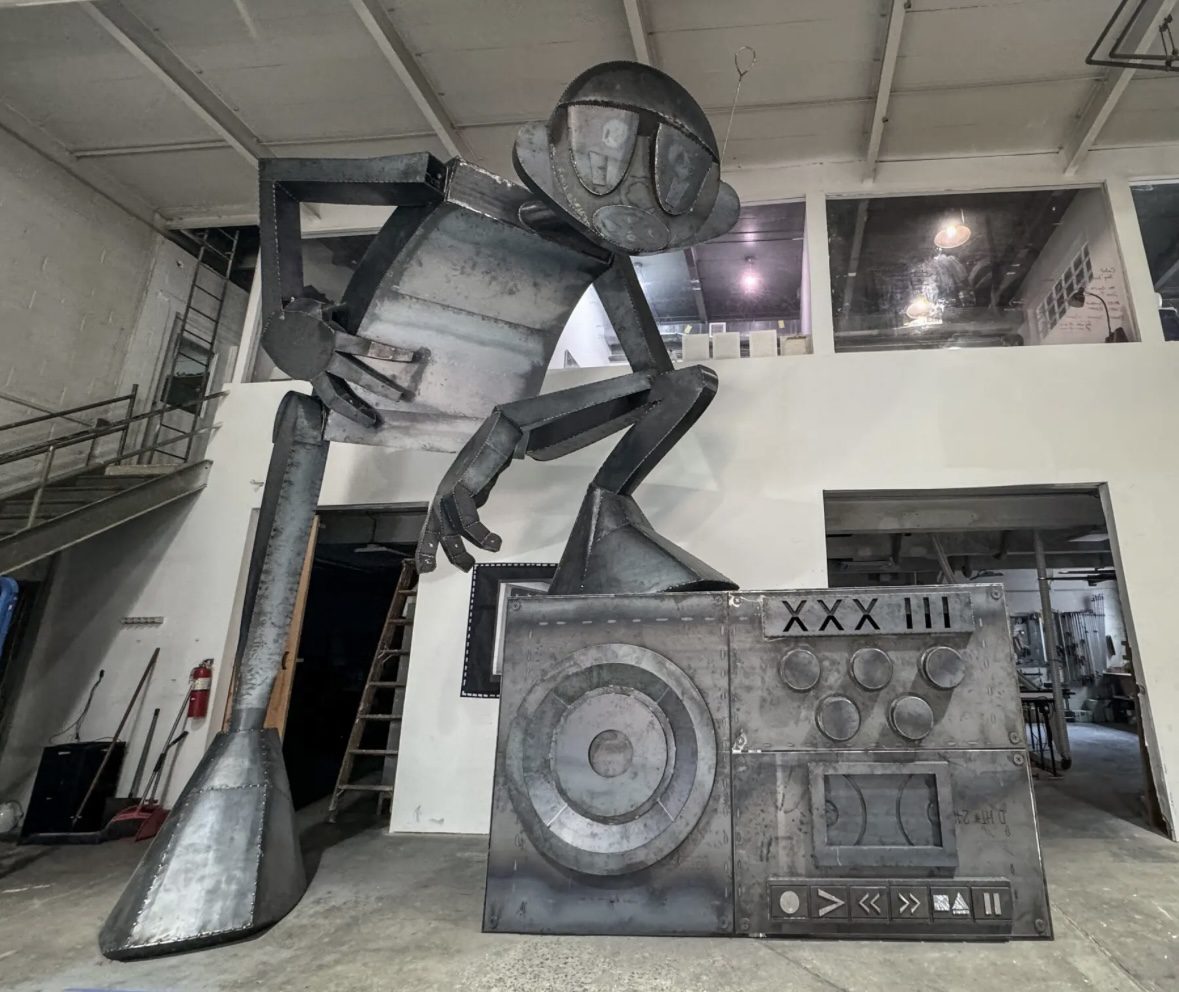

For the first time ever, athletes competed in breaking at the 2024 Olympic Games in Paris. The United States—the birthplace of hip-hop culture, including breakdancing—had an original reaction to this. It was decided that a giant sculpture of the first hip-hop comic book character would be gifted to Paris. In this article on i-bronx, we’ll tell you about the character, his creator, and the story behind the creation of the sculpture itself.
Who Created the Rappin’ Max Robot?
Hip-hop was born in the Bronx in the 1970s. It was a truly unique culture. It started with uncertain DJs who dared to change the familiar rhythms, dancers who picked up on the new tracks and interpreted them with movements that were unconventional for the time, and street artists who looked for ways to reproduce the new culture on walls and fences. Hip-hop quickly captivated the youth of the Bronx, then all of America, and soon reached Europe.
This new musical movement also captured the attention of a young artist from the Bronx, Eric Orr. From an early age, he was fascinated by comic books, even bringing them to church with him, and was constantly drawing fun stories for his friends at school. Eric had come up with the robot character a long time ago. He often left a drawing of just the robot’s head under his comics and graffiti in the neighborhood as an improvised signature.
Everything changed after a chance meeting between Eric and his former classmate, John, who had become a DJ and founded his own label, Strong City. John hired Orr to create a logo because he knew that Eric was a great artist with a unique hip-hop style. As the label grew, Orr became the art director, designing logos, album covers, and illustrations for artists of the Golden Age of hip-hop. At one point, he found himself thinking about his childhood passion for comics and realized that there was nothing on the comic book market that reflected hip-hop culture. That’s when he decided he would be the first to do it. It didn’t take Eric long to realize that his robot from childhood would be the main character.
The First Rappin’ Max Robot Comic
But in reality, it wasn’t so simple. He not only had to draw the comic, but also get it seen. Orr had no money, so he turned to his friends for help. The artist Keith Haring, with whom he had created a series of drawings for the New York subway, became one of Eric’s partners. He bought an ad on the back cover of the comic and helped fund the first issue along with Orr’s other friends. This made it possible to print 500 copies.
The first issue came out in 1986 and featured scenes from the robot hero’s life: rap battles, listening to a new album on a boombox, and a message that he didn’t use drugs. The comics were distributed by hand: Orr visited every bookstore. His efforts paid off. The first issue sold out in a month and caught the attention of the press, including the New York Daily News. The hip-hop community also responded positively to the project. The graphic robot, which Eric named Rappin’ Max (MAX—Maximum Audio Xperience), became the embodiment of all the elements of hip-hop culture: rap, breaking, DJing, and graffiti, as all the comics told stories from the world of hip-hop. Orr released three more issues, which differed slightly in design. The first issue was a traditional comic, and the next three had a fold-out format, inspired by the International Graffiti Times magazine, which documented street art and hip-hop culture.
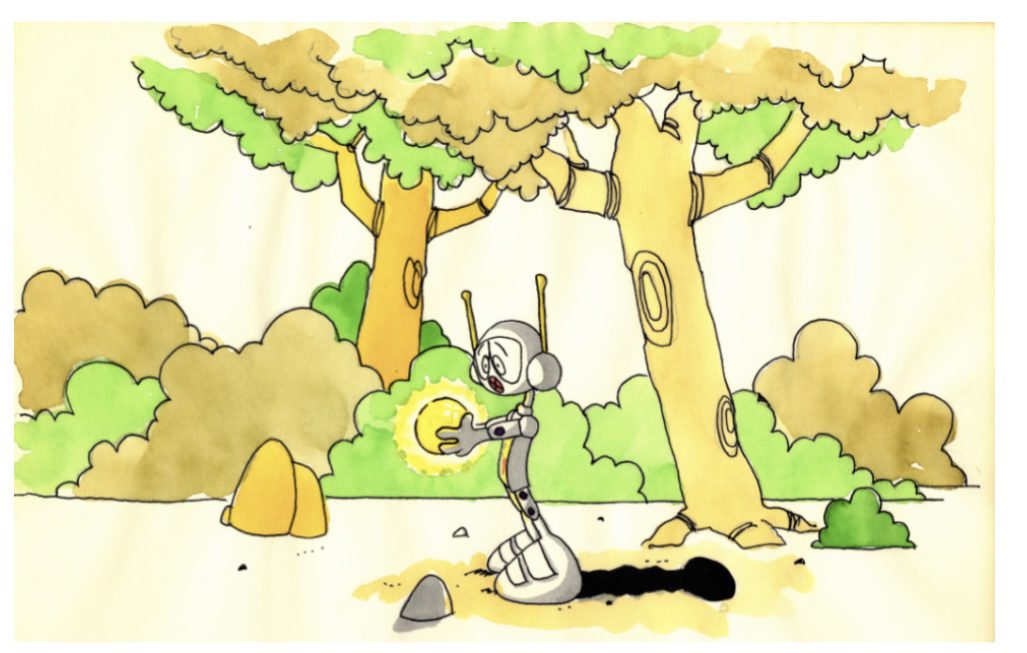
Orr’s four issues became an important part of the 80s hip-hop scene, as they combined publishing, music, and art.
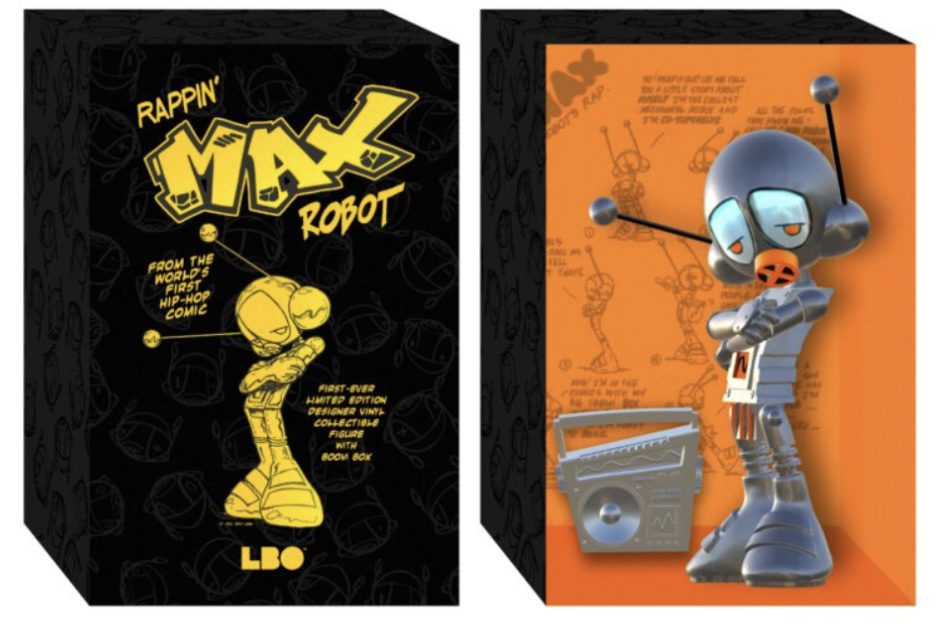
Rappin’ Max later moved beyond comics: his image began to appear on various products, including T-shirts, Xbox faceplates, and more. A designer toy was even created—a 9-inch vinyl figure that reproduces the famous image of the Rappin’ Max robot in his characteristic pose: with a bent back, tilted head, and crossed arms, demonstrating the B-Boy style. Initially, these figures were made in black and white, but then a limited collection by Eric Orr was released in bright colors with fluorescent orange accents and light blue lenses. This limited-edition collectible figure has an adjustable head and antennas, as well as a stylized boombox for listening to your favorite tracks. The special packaging is designed with images from the comic and Orr’s famous works.
Creating the Sculpture
That first small figure inspired the hip-hop community to create a giant sculpture when it came time to choose a gift for Paris to celebrate the inclusion of breaking in the Olympic program. The job was entrusted to true professionals—Welder Underground, a division of Collab, an innovative lab and studio founded by Mark and Adina Levin. Collab specializes in large-scale experimental installations using a variety of technologies, from stop-motion animation to 3D printing and VR/AR. Collab is also known for its community projects. It supports young people through educational programs that help students gain technical skills. One such program is dedicated to the basics of robotics.
But in the case of the Rappin’ Max Robot sculpture, knowledge of robotics wasn’t as important, as it’s a comic book character with a much simpler structure. Here, the main process was welding, which allows for quickly joining metal parts. Several participants from Welder Underground’s training programs were selected to take part in the actual creation of the sculpture.
All the selected participants went through training on safety and working with a welding machine, and also practiced these skills with the training sculptors. The son of the famous robot’s creator, also named Eric Orr, participated in the project. He said after personally welding one of the parts:
“Everyone thinks I did it just because it was my dad’s project. But more so, I did it because I wanted to gain a new skill that will be with me forever.”
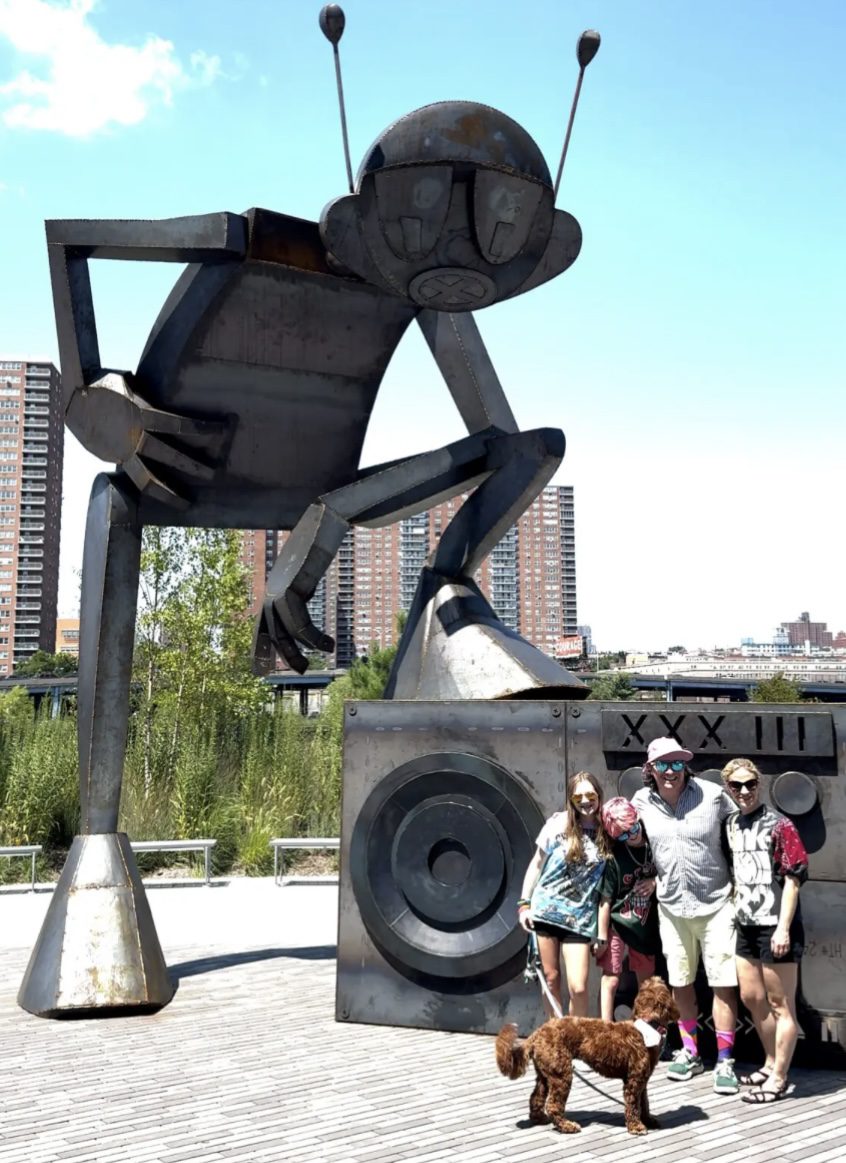
Sculpture Unveiling
The sculpture was made from 7,000 pounds of steel and embodies the B-Boy style. The largest element was the 10-foot boombox, which weighs 3,000 pounds.
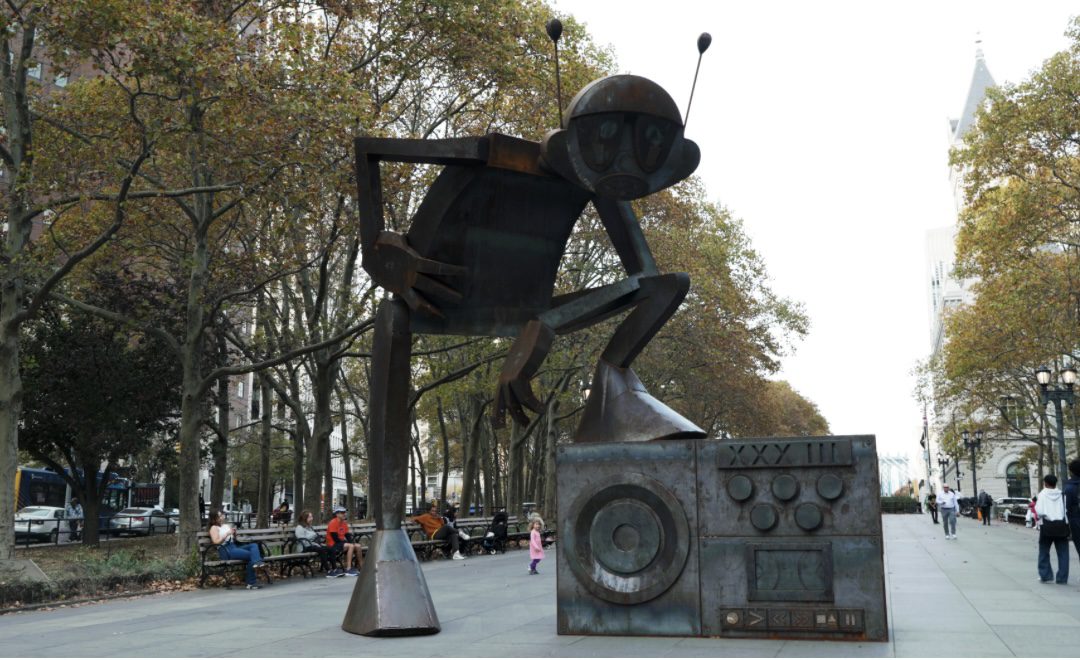
After an intense eight months of work on the Rappin’ Max project, the sculpture was completed and unveiled at the Collab studio. It was first presented to the public on July 25, 2024, in Brooklyn, and on August 10, it received its second antenna during a celebratory event near the yet-to-be-opened Museum of Hip-Hop in the Bronx.
Many people gathered for the sculpture’s unveiling in the Bronx. Hip-hop music filled the air, and hip-hop historian Pete Nice served as the host.
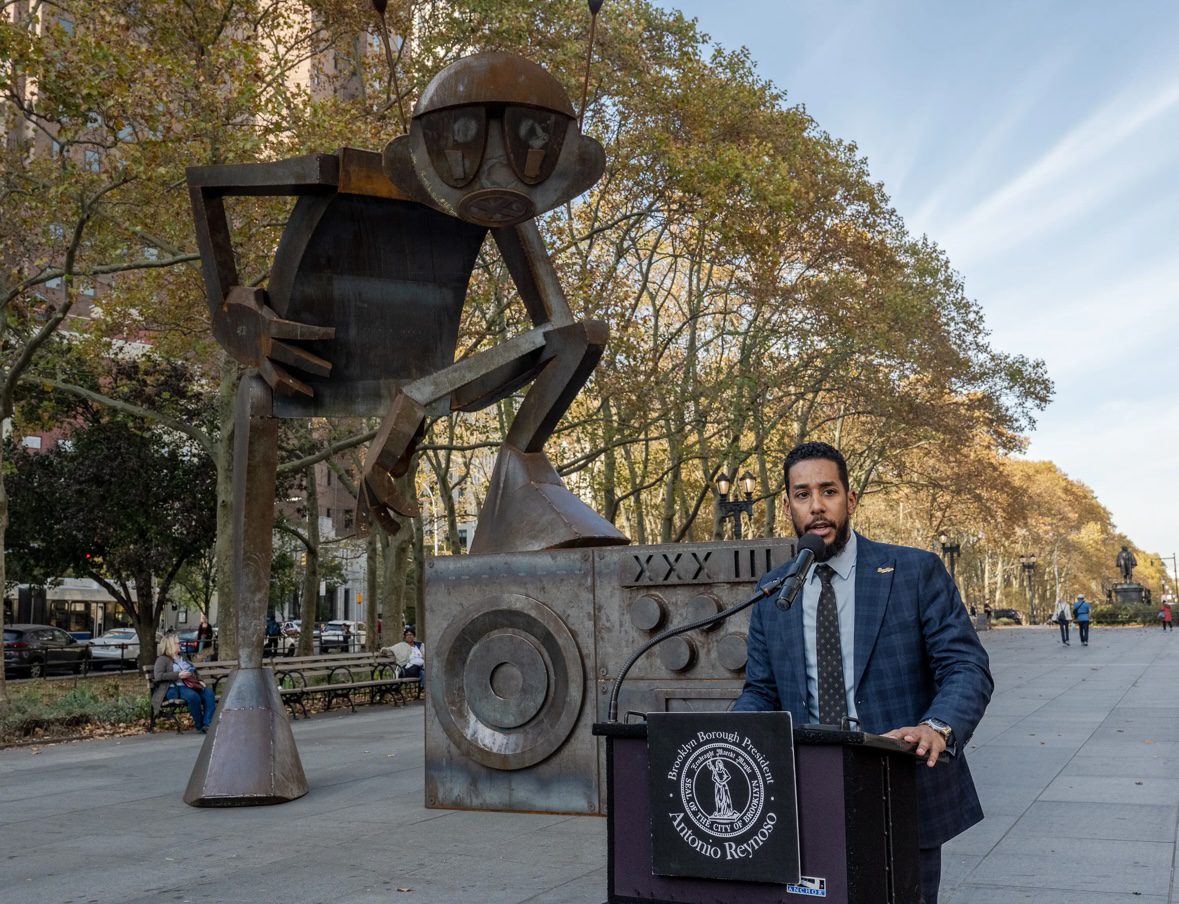
Borough President Vanessa Gibson was also present and unexpectedly announced her decision to give the museum a $1 million check, as well as the opening of a new STEAM school at the Hutchinson Metro Center in Pelham Bay. The two-million-square-foot school is planned to open in 2025 and will focus on science, technology, engineering, arts, and mathematics.
Future Plans
The sculpture will remain at the Museum of Hip-Hop in the Bronx for about a year before heading to Paris, where it will be located in the famous Place de la Bataille-de-Stalingrad. It will be part of a gift to commemorate the first (and perhaps only) inclusion of breaking in the Olympic program. The team also plans to install a portable speaker on the statue that will play music. It’s not hard to guess what style of music will be playing from it.
The owner of Collab also said that the program’s organizers and participants really enjoyed the metalwork project, so they decided to launch another six-month program in Chicago and Detroit. Details haven’t been released, but it will also be something large-scale and significant. Mr. Levin said:
“They came to learn how to fabricate metal, to weld, but then they can go further with it. I want them all to be invaluable wherever they go. We want young people to come in here and see that there’s a glimmer of hope and a future.”
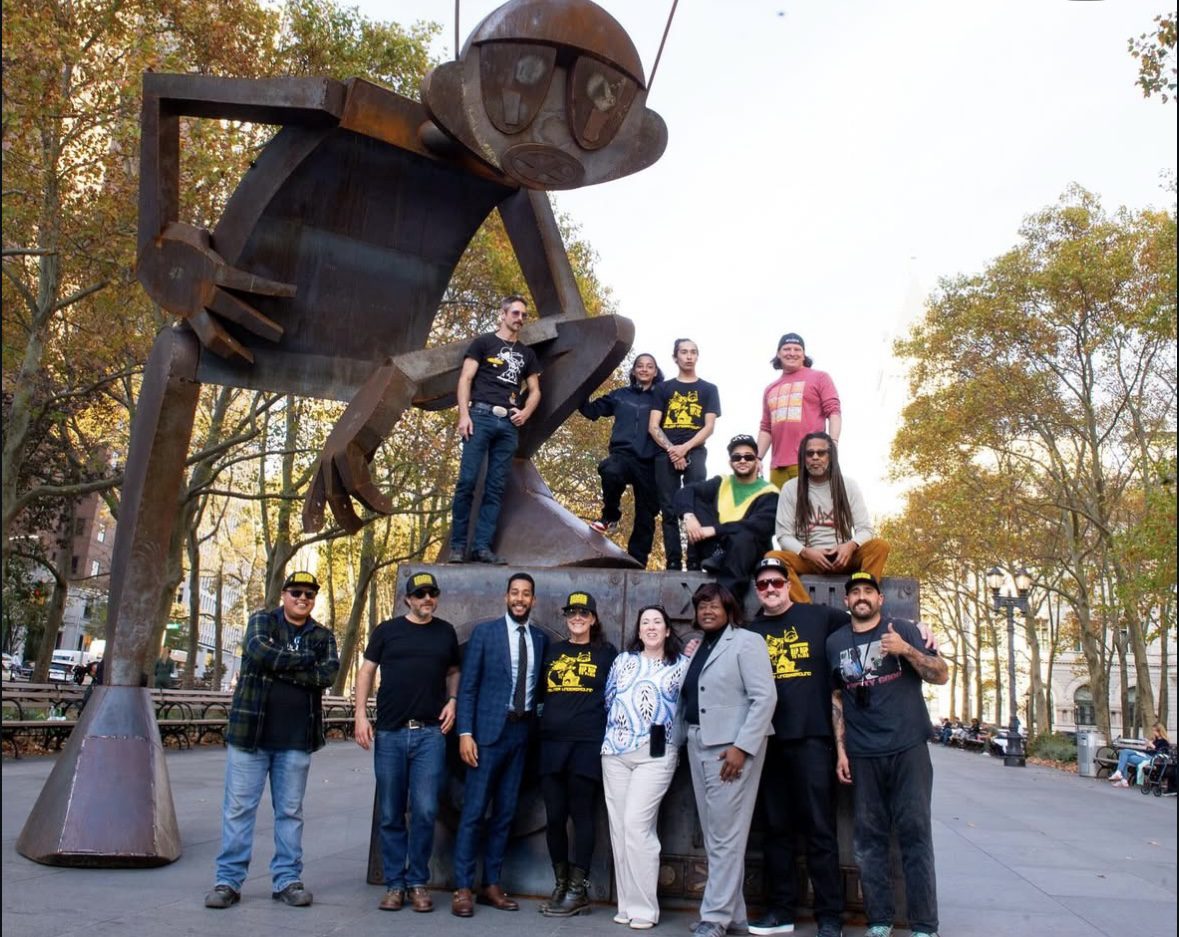
After the training, the company helps all participants with resume preparation, cover letters, and LinkedIn profiles for job searching.
So, one project brought together two important causes—creating a symbolic work of art and providing young people with useful skills.
References:
- https://www.firstcomicsnews.com/the-first-ever-figure-of-the-worlds-first-hip-hop-comic-book-character-by-eric-orr-rappin-max-robot-designer-toy-by-lbo-collective/
- https://www.bkmag.com/2024/08/28/local-legends-rappin-max-robot-is-now-an-18-foot-tall-sculpture/
- https://www.nytimes.com/2024/08/08/nyregion/rappin-max-robot-hip-hop.html