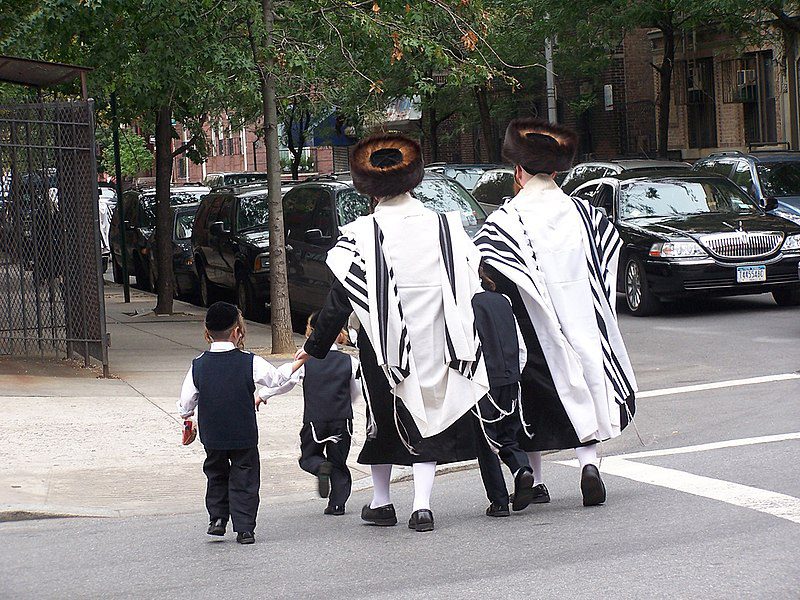

The modern world is an interweaving of various cultures, ideas and influences. The leader among the nations that easily change their identity and forget their past are the Jews. If earlier they lived in traditional and conservative communities on the territory of the Baltic States, Ukraine and Poland, now these people are scattered all over the world. Thus, there are many of them in the Bronx. Here, the Jewish population is not so monolithic and fanatical about preserving their religion and the traditions of their ancestors. Read more about the Jews of the Bronx on i-bronx.com.
Jewish New York
As noted by tabletmag.com, Jews made up 9% of the population of New York in 2016. It was 1.1 million people. The largest Jewish population lives in Brooklyn (this borough of the city is also called the most Jewish place on Earth), as well as in Queens, the Bronx, Manhattan and Staten Island. If you compare the number of the Jewish population of Brooklyn (600,000) with the number of Jews in Jerusalem or Tel Aviv, this borough is confidently in the lead.
The Jewish community of the city practices Judaism. The first Jew to set foot on American ground (according to official data) was Jacob Barsimson. This happened in 1654. In the following years and decades, the narrow stream of Jewish emigrants to the USA turned into a wide one. This was facilitated by internal political events in the countries where they lived before, such as tsarist anti-Semitic Russia, Nazi Germany, the collapse of the USSR, economic troubles in the countries of Asia and Eastern Europe, etc.
Jews in the Bronx
In the 1930s-50s, the Bronx has become a real home for the Jewish community and one of the largest in the United States. More than 360,000 Jews lived here. There were 260 registered synagogues and about 500 unregistered ones.
Why the Jewish Bronx has changed
To understand what the Jewish Bronx was, let’s use Alter Yisrael Shimon Feuerman’s story about his life in this borough. As a child, the boy accompanied his father not to baseball games, but to funerals. The latter had a lot of work to perform religious services after the death of the Jews of the borough and beyond. It was a time when the Jewish Bronx and the Bronx that everyone knew was dying.
The Jewish population (such as German, Irish and Italian) that had previously lived in the area left after World War II. It became part of the demographic changes that reshaped America’s cities. This process was also called gentrification. Historians say that the Jewish population of the area south of Tremont Avenue was 80%, which was a lot.
The next stage began after the construction of highways, which destroyed the old buildings and divided the borough in half. The middle class (which included artists, musicians, playwrights, merchants, lawyers and their white wives) fled to the suburbs to become Americans and to abandon the collective identity they had once shared through religious observance. At the same time, a small number of Jews never left. Next to them, settled blacks and Latin Americans who sought affordable housing and the new, elite houses that began to appear in the Bronx.

What was the Jewish Bronx like?
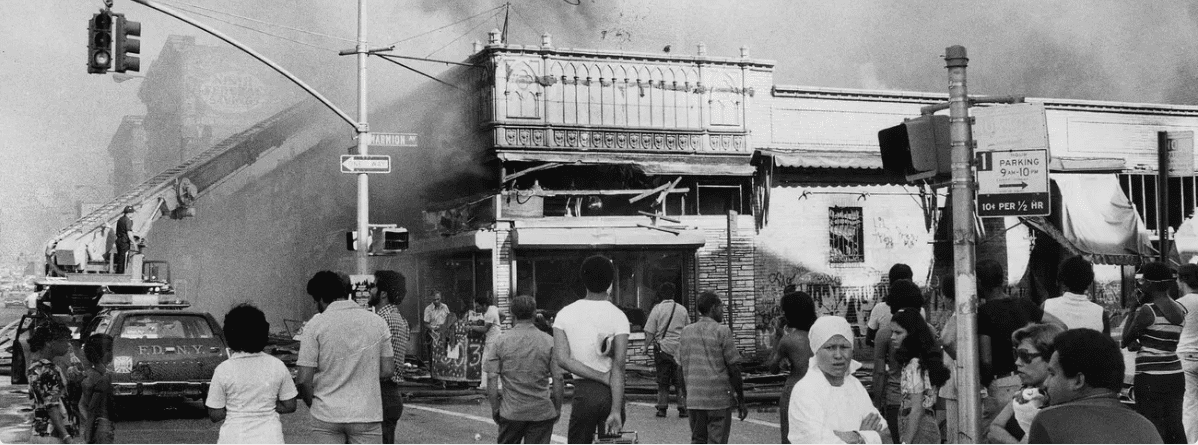
What was the Bronx like before many Jews left? 250,000 representatives of the Jewish population lived there. The children went to DeWitt Clinton High School and the Hebrew Institute. Heroes of the Second World War, such as artilleryman Cantor Abe Weroba, performed there for major holidays and 1,500 people came to listen to them. Live chicken markets, numerous kosher butchers and a game of stickball that lasted all summer were a constant feature of this time. In the 1970s, the Bronx was a mix of concrete and cobblestone. Fires often broke out here, gang fights took place, drugs were sold in crowded places and walking down Maycomb Road, you could step into dog’s poop. In one of these years, the grandfather of Alter Yisrael Shimon Feuerman, who came to the Bronx from Kolomyia (Ukraine) and worked as a painter, had his car stolen. The car was found a few blocks away from his house. Local boys took it for fun and left it without tires and other important parts. After that, he would walk down his street and hold the jagged edge of the bottle tightly in his hands for protection.
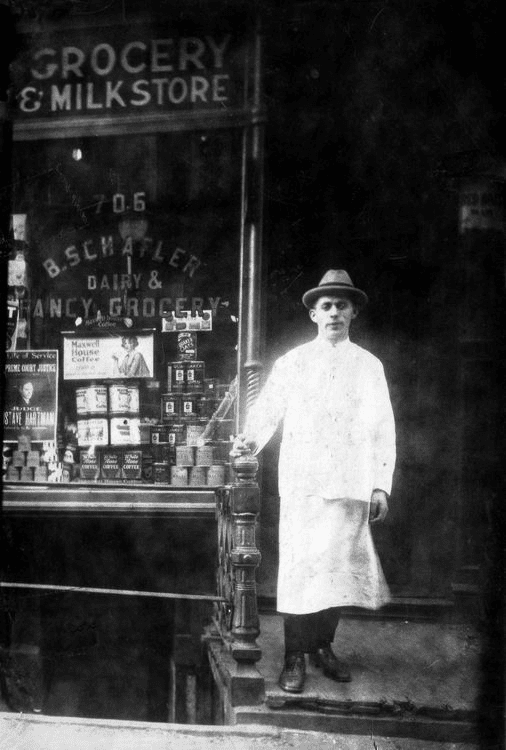
Old buildings disappeared along with the population. Hundreds of synagogues were sold to churches or drug rehabilitation centers. On Featherbed Lane, there was a pastry shop called Eli’s. It was the dream place of all the boys in the surrounding blocks. They ran there in shorts to buy candy, magazines, books and toys. The owner of the shop was Eli, a Jew who did not practice Judaism, but knew the Talmud well. The patisserie was gone, like all the other buildings for the middle class.
Revival of Bronx Jewish traditions
At the beginning of the XXI century, the Jews of the Bronx are not as united as they used to be. In the South Bronx, there is a community of the Hasidic branch of Judaism called Chabad. Choli Mishulovin, co-founder of Chabad of the South Bronx, noted that there are many Jews everywhere, in any city, even here. However, in this borough, they were not noticed and neglected for a long time. Chabad does not have its own place to meet, worship or celebrate Jewish holidays. Nevertheless, Chabad leaders organize Saturday dinners and discussion groups for Bronx Jews. Meetings are held at the home of one of the participants or in rented premises.
Tour through the Jewish Bronx
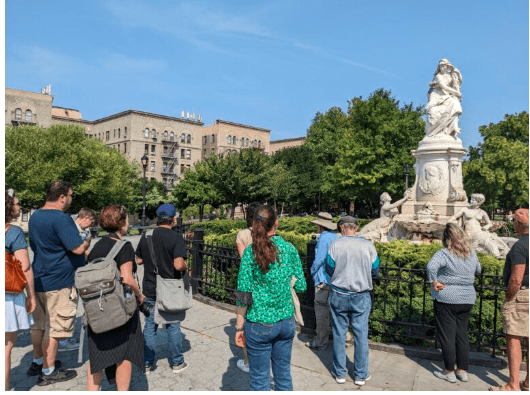
The migration of Jews from the Bronx to other boroughs and suburbs stripped the area of remnants of the old communities that once dominated the area and can still be found today. In the XXI century, a Jewish community of 20,000 people remained in Riverdale. If you walk through the Bronx, you can see the remains of the historical Jewish heritage. Thus, the Heinrich Heine fountain was originally installed in Dusseldorf, where the famous German poet of Jewish origin was born. In 1897, it was transferred to New York, to the Bronx.
Then, you can walk along Grand Concourse Avenue and see the building of the Christian Charismatic Prayer Fellowship Inc. on Morris Ave. Previously, there was a synagogue in its place. The Star of David on the roof is gone, but other religious images and inscriptions on the window bars are still present.
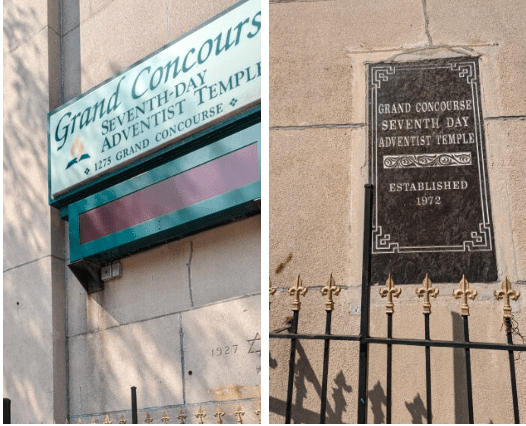
The same is the fate of Temple Adath Israel, which is today called the Seventh-day Adventist Temple. It is located at 1289 Grand Temple on East 169th Street. This temple was acquired in 1972.
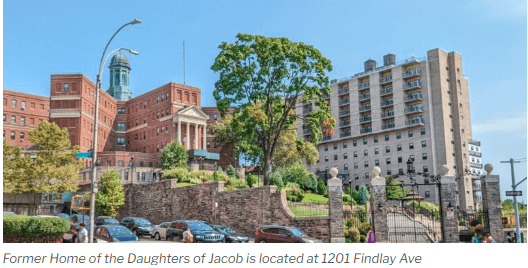
Another Jewish landmark is also exceptional. It’s the Daughters of Jacob Home and Hospital at 167th Street and Findlay Ave. There is no more Star of David here either. However, Jewish symbols are visible above the gate.
The Andrew Freedman Home is now a meeting center for artists, entrepreneurs, educators and technologists, where they gather to work on sustainable community development. Previously, it was a home for elderly people who did not have money to support themselves. From 1922, millionaire Andrew Freedman took care of it. During the Second World War, German and Jewish refugees lived here.
Thus, the Jewish spirit of the old Bronx can be found, reclaimed and multiplied, isn’t it?