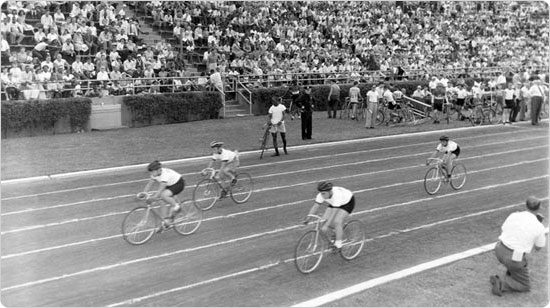

It is hard to imagine the modern world without bicycles. They are part of the sports, entertainment, leisure, travel and help transport goods. Cycling also contributes to combating global warming. In particular, bicycles are actively popularized in New York, specifically in the Bronx. i-bronx.com will tell you more about it.
History of cycling in the city
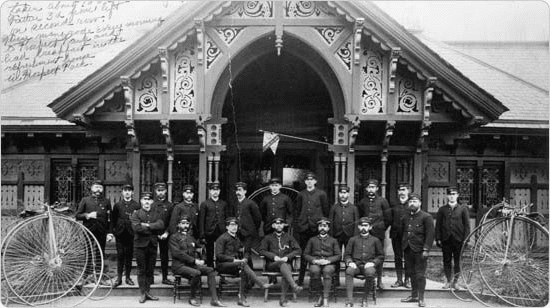
According to nycgovparks.org, bicycles gained popularity in the city right after their invention. Most of us only know about a standard two-wheeled bicycle. However, it did not always look like this. This vehicle went through a certain evolution from the unicycle, high-wheel bicycle, tricycle and finally to the bicycle we know today.
Traffic regulations
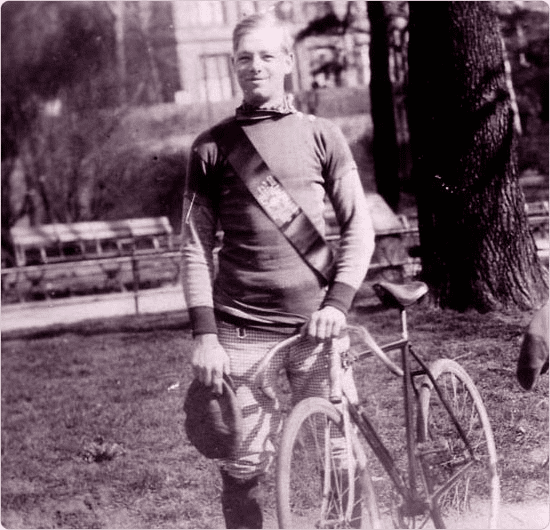
The interest of the residents in this new technological invention pushed the city authorities to develop rules to regulate cyclist traffic on the city streets. In particular, it was allowed to ride this vehicle from November to May until 10:00 a.m. and after 7:00 p.m. during other times of the year. These instructions had to be coordinated with local equestrian clubs so that everyone could enjoy their leisure time comfortably. Also, “wheel men,” as cycling enthusiasts were called back then, had to register with the Parks Department. They had to wear a special badge on their chest (bike badges appeared in 1885). Cyclists were required to be cautious while riding, especially when pedestrians were nearby. When passing through squares or entering parks, they had to dismount their bicycles when riding downhill. On tricycles, this could be done while braking and riding slowly. Loud whistling or honking was prohibited. After sunset, it was necessary to have a lit lamp. Racing and exceeding the speed limit were forbidden as well.
Development of bicycle infrastructure
In 1894, cyclists in NY received positive news. On June 15th, Albert H. Angel’s efforts to create cycling infrastructure were rewarded. The first bicycle lane was built on Ocean Parkway. Over 60 cyclists, government officials and police representatives attended the opening. The speed limit on the lane was set at 12 miles per hour and 10 miles per hour in the park.
In 1896, racks and shelters for bikers were built in Prospect Park in Brooklyn.
At the end of the 19th century, bike lanes were laid on Pelham Parkway in the Bronx.
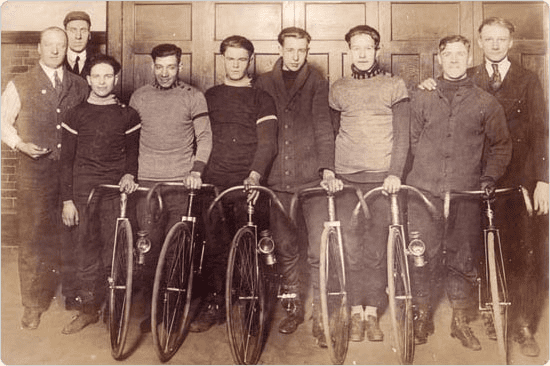
In 1920, with the help of the Long Island Wheelmen cycling club, a bike race in Queens’ Forest Park was held. The Century Road Club of America organized a similar event in McCarren Park in Brooklyn. A bike stand was set up at Coney Island.
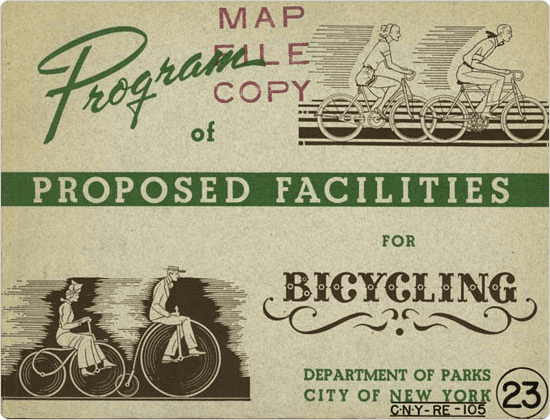
Bicycle politics under Robert Moses’s leadership and bike lanes in the Bronx parks
In the 1930s, the city’s policy regarding the development of cycling infrastructure was on the rise. When developing the parks, companies were required to build bicycle facilities. In 1936, a road was opened to the west of the shopping center in Central Park. Under the New Deal of F. Roosevelt, bicycle lanes were built in 21 city parks. They varied in length and were designed to avoid monotony during riding, allowing bikers to relax and physically rest. One such path ran along the center strip of Pelham Parkway, and the other, 0.13 miles long, was in Soundview Park in the Bronx. Cyclists were also allowed to ride on running tracks.
In the 1940s, new bike lanes continued to appear. There were already 29 of them. One of the lanes stretched along Hutchinson River Parkway in the Bronx, which was open to cyclists until 1:00 PM.
In the 1950s, a 50-mile bicycle lane in parks began to be built.
In the 1970s, the city promoted the cyclist movement and tried experiments on roads (such as Madison Avenue). Some roads were closed to cars on weekends and instead opened exclusively for bikers. This practice was resumed at the beginning of the 21st century. For example, Park Avenue was blocked for cars on four Saturdays in August 2008. On one Sunday in 1974, a four-mile highway of the Grand Concourse in the Bronx was closed. This same road was later closed again in the 1990s, thus contributing to the development of cycling in the Bronx. In 2006, the Bronx borough president, Adolfo Carrion Jr., proposed reviving this practice. He believed that healthy nutrition, health checks and walking are very important.
But let’s go back to the 1970s. In 1976, the city allocated $1.6 million for bicycle paths. In 1977, the Bicycle Advisory Committee was founded to discuss the complex issues related to the needs of cyclists. In 1979, the position of Bicycle Safety Coordinator was created to collect information and inform city authorities about the number of bicycles on the streets.
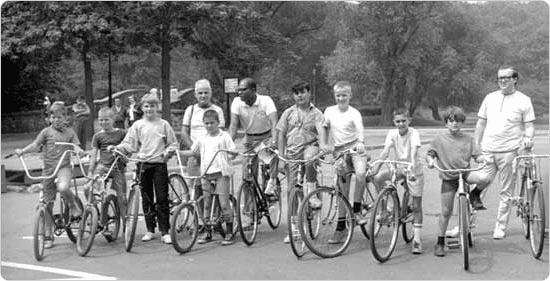
The importance of the Bronx bicycle routes
Bicycle tracks should be designed to allow easy access to the city center and also to move beyond its borders. Thus, the Bronx is an important cycling corridor in New York. The fact is that only the Bronx is connected to the mainland. There are five different Greenways that connect this borough with Westchester County and with other parts of the USA. This is all thanks to the East Coast Greenway Alliance that built Pelham Greenway, which stretches to the state of Maine.
There is also a bicycle trail in Van Cortlandt Park. It is a dirt road that leads to a bike path in Westchester and goes for many miles. The Parks Department has also completed a bike lane across the Hutchinson River. Therefore, a new route to Westchester is provided. The best trail through the Bronx is the Bronx River Greenway, located in the center of the borough.
Pelham Park in the Bronx
Today, Pelham Park is three times bigger than Central Park. There are walkways, trails, a beach, the Bartow-Pell Mansion, golf fields and a coastline. Athletes love this spot because of the numerous courts and football fields, while children like playgrounds there.
A significant part of the park is a 2.25-mile boulevard. This path starts from Bronx Park near the Bronx River Parkway and US Route 1 (US 1) and ends at Interstate 95 (І-95), adjacent to New England in Pelham Bay Park. This is a two-lane cycling road with limited access. Trucks are prohibited here, but cars are allowed to use parallel service roads. The bike lane here is called the East Coast Greenway, which is part of the route that runs along the boulevard. The boulevard also has two bike lanes between Boston Road and Stillwell Avenue, which extends in different directions. These lanes are also part of the large East Coast Greenway highway that connects Maine and Florida.
Therefore, it is difficult to cover the whole history of cycling in New York in a small article, but some of its aspects have been highlighted here. Particularly fascinating is the history of the emergence of bicycles and the development of the first rules for using this transport, the coordination of bike traffic with other vehicles and horses, the appearance of the first cycling clubs as well as the fight of cycling enthusiasts for their rights and bike lanes building. Do you enjoy riding a bicycle?