The history of mankind is a set of interesting facts, events and phenomena that now cause smiles, admiration or criticism. Thus, the Persian king Xerxes ordered to whip the water in the Dardanelles to punish it for the damage it caused to the army. Our ancestors can be forgiven for this. However, when in the 20th century things happened that went beyond the limits of reason, we just have to wonder. We are talking about the Prohibition era in the USA. It was adopted to reduce alcohol consumption and expand the rights of women. However, it contributed to the strengthening of organized crime and did not achieve the desired result. This law also had its peculiarities in the Bronx. That is why i-bronx.com tells you more about the situation in the Bronx in those days.
About the Bronx
The Bronx is a part of New York. The growth of this borough began after the First World War. This was facilitated by the expansion of the New York subway, which caused a boom in housing construction and increased the population. Different ethnic groups settled in this area: Americans of Irish origin, Italians, Germans and Jews. They were proactive entrepreneurs, who came from their countries and lived in separate groups and communities. Criminal elements often appeared among them. This led to a violation of the country’s legislation.

The Prohibition era in the USA
The idea of banning alcohol is not new. In the USA, they have tried to introduce it since the middle of the 19th century. This decision was actively promoted by American women, who were barred from saloons. They were funded by brewers who offered customers free salty food that increased thirst. The women also were banned from voting and wanted to combat men. In 1873, the Women’s Christian Temperance Union was founded for this. From the 90s of the 19th century, the Anti-Saloon League took action. This organization consisted of Republicans, Democrats, Evangelicals, those who wished to protest and other people. It was this organization that was the driver of changes in the sphere of production, sale and consumption of alcohol.
The organization was active throughout the United States. By 1919, it was only able to achieve success in certain states. At the same time, measures to ban alcohol in the states of Maine and Iowa were found to be ineffective, because the smuggling of this drink from other states immediately increased. At the beginning of the 20th century, Kansas, Nebraska and North Dakota were added to the list of non-drinking states. In 1912, there were already 12 of them. There were 26 in 1916.
The First World War began. The USA entered it in 1917. In an effort to preserve grain for food, Congress adopted the Eighteenth Amendment to the Constitution on the introduction of the Prohibition era. In the same year, the production of whiskey was stopped. In 1919, the production of beer ended. The law entered into force in 1920. It prohibited the manufacture, sale and transportation of alcohol within the country. In addition to the Amendment, Congress passed the Volstead Act to clarify certain details of alcohol prohibition. President Woodrow Wilson vetoed the bill, but Congress overrode it and the Senate voted for it the next day. According to this law, the legal definition of alcohol was established, as well as fines had to be paid for its production.
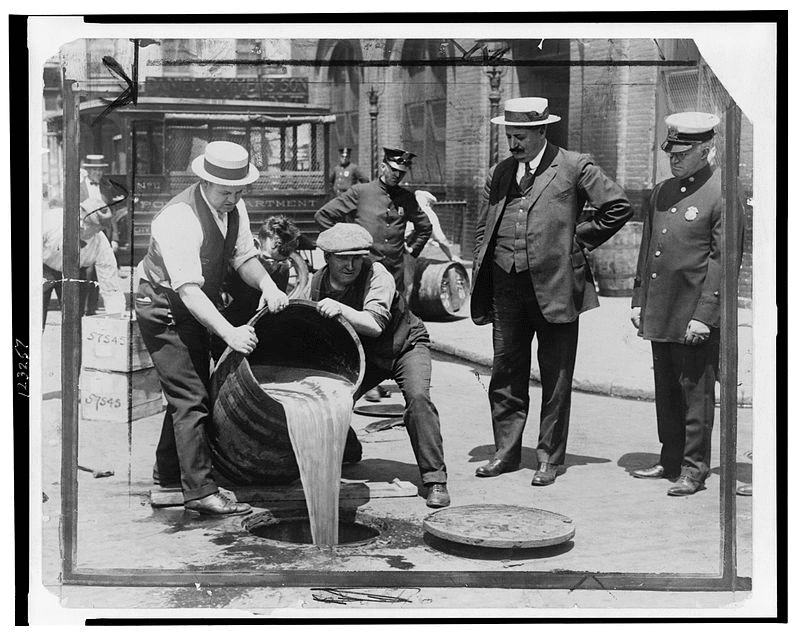
Anti-alcohol campaign in the Bronx
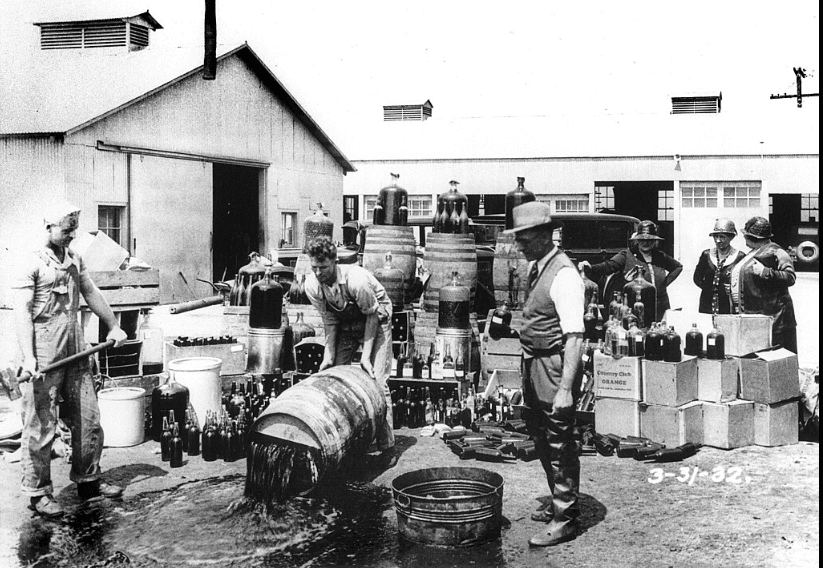
The adoption of the law contributed to the strengthening of organized crime, corruption and the production of low-quality alcohol. In the Bronx, there were smuggling gangs consisting of Irish, Italian, Jewish and Polish representatives.
In 1921, on October 15, the Bronx grand jury called on the federal government to abolish Prohibition due to unprecedented violence and drug abuse. Lawmakers believed that the police were doing everything they could, but it was impossible to fulfill the task that the federal government had set before them. Deputies also condemned the raids on the houses of people who looked like pirates and broke down the doors of respectable Americans to find rum.
Taxes and brewers
Alcohol production has always been a profitable business. Therefore, the state often had a monopoly on distilling. This was not the case in all countries. Sometimes, private entrepreneurs also had this right and the state taxed them. In the USA, such taxation began in 1862 after the beginning of the Civil War to fill the budget. The receipt of funds from alcohol producers continued even after the war. This contributed to the unification of brewers (especially German brewers) in the US Brewers Association. The workers of such enterprises also joined a trade union to protect their interests.
If the breweries paid taxes, the distilleries evaded it and cheated. At the beginning of the 20th century, brewing became the 5th largest industry in the United States. Brewers considered themselves untouchable. This continued until President Taft proposed the 16th Amendment in 1909, which introduced a federal income tax. Congress has the right to impose and collect income taxes from any source, without apportioning them among the individual states and regardless of the census or counting of their workforce. Therefore, the tax for brewers became less important.
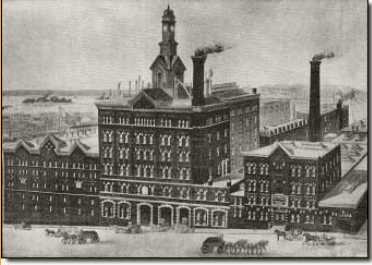
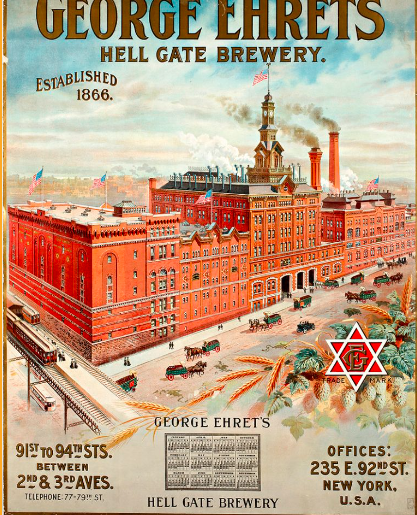
At the same time, the First World War caused anti-German sentiments and mainly Germans were engaged in beer production. The lack of grain contributed to the government’s ban on its use for the production of alcoholic beverages. George Ehret of Manhattan’s Hell’s Gate Brewery, who was apprenticed to a brewer at Hupfel Brewery in the Bronx, had his property, money and securities confiscated after he made a trip to Germany.
Next came the 18th Amendment. However, the brewers felt that this would not hinder their business very much. The average consumption of beer in 1917 was thirty gallons! This was followed by the Volstead Act, which banned light beer and wine, but allowed beverages containing 0.5% alcohol.
Prohibition spelled the end of many small local breweries in the Bronx. Larger establishments could receive investment and repurpose their production. Some of them produced ‘almost beer’ (Eichler’s, Ebling’s and Mayer’s), others turned into dairies (produced ice cream) and one brewery was transformed into a mushroom farm (Hupfel Brewery). Businesses like Haffen Brewery, Mayer’s, Zeltner’s and North Side Brewery closed.
The New York Times reported that city taxes increased during Prohibition. Manhattan’s rate was fixed at 2.49, Bronx – 2.54, Brooklyn – 2.55 and Queens – 2.56. Prohibition cost the state $6 million and the state income tax provided compensation in the amount of $10 million.
Cocktail The Bronx and Prohibition
Many events are connected with Prohibition. One of them is the invention of a cocktail called The Bronx. It is not as famous as Martini and Manhattan, but its refreshing orange taste and simple preparation allow you to experience great pleasure. This cocktail, like many other drinks, was invented on the eve of the introduction of Prohibition by Johnnie Solan. The idea for the drink came to him after visiting the Bronx Zoo.
This is the story of the Bronx during the Prohibition era.