

Medicine is one of humanity’s greatest achievements, having saved millions of lives. It has become an indispensable part of the modern world, where medicine and pharmacy go hand in hand. Daily discoveries in medicine open doors for new innovations in creating drugs that offer hope where it seemed there was none left. Read on at i-bronx.
However, an important question arises: how do you become one of the people behind these vital discoveries? How do you master the science of creating drugs, understand their effects, and improve treatment methods? The answer starts with education—quality, thorough, and innovative education.
In the Bronx, a hub of diversity and culture, there are institutions that train future professionals in the pharmaceutical field. In this article, we’ll tell you about the Wegmans School of Pharmacy—an institution that has become synonymous with excellence in training pharmacists. We’ll also look at the career prospects for pharmacists and mention other institutions where knowledge and practice are combined to turn students into leading specialists.
Is a Career in Pharmacy Still Relevant When Robots Can Do the Job?
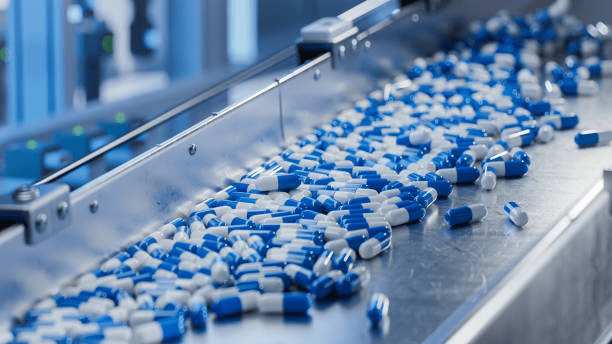
In a world where pharmaceutical plants operate with clockwork precision and robots perform most processes automatically, a logical question arises: does the pharmacy profession have a future? After all, even the calculation of complex chemical formulas has long ceased to be an exclusively human task—artificial intelligence can easily handle tasks that once seemed possible only for highly qualified specialists.
But don’t be too quick to write off the pharmacy profession as a viable career. Yes, robots and programs are great at handling routine tasks, but a pharmacist’s key strength is not just knowledge of chemistry or medicine. It’s empathy, creativity, and the ability to see beyond the numbers and formulas to real human problems.

Think about it: robots are not capable of identifying social nuances or understanding the specific needs of a community. The pharmacist of the future is not just a person who can discover a revolutionary drug that will save millions of lives around the world. It’s also a specialist who can help solve the specific problems of their neighborhood or city. For example, in the Bronx, where issues of drug and alcohol addiction are very serious, pharmacists can develop new treatment methods or even prevention strategies.
What’s more, technology cannot replace a human-centered approach to patient care. Who better than a pharmacist to explain to an elderly woman how to take a new medication correctly? Who will help parents understand which medications are best for their child?
As for prospects in the Bronx, the profession of a pharmacist remains in high demand. Local pharmaceutical institutions are actively implementing innovations, seeking new solutions for chronic diseases, and working on prevention programs. In addition, a pharmacist can work not only in a pharmacy but also in research labs, medical centers, or even get involved in creating educational programs for young people.
Wegmans School of Pharmacy
Founded in 2006 as part of St. John Fisher University, the Wegmans School of Pharmacy was a response to the growing need for qualified pharmacists, especially as medicine rapidly changes and health challenges require new solutions.
From day one, the Wegmans School of Pharmacy emphasized that quality education must be based not only on theory but also on practice. For example, students go through rotations in real pharmacies, medical centers, and research labs during their studies. Imagine this: future pharmacists, while still in school, face situations where their knowledge can help a patient—how to properly choose a drug dosage, how to avoid side effects, how to explain to someone why it’s important to finish a course of antibiotics. These skills cannot be learned from textbooks; they only come through experience.

The school’s founders understood that pharmacy is not just about drugs; it’s about the people who create, test, and use them in practice. Therefore, the curriculum at the Wegmans School of Pharmacy is structured so that students feel like they are part of this important mission. For example, one of the key elements of the education is an interdisciplinary approach: future pharmacists work in teams with doctors, nurses, and researchers, developing their collaboration skills.
Over the years, the school has maintained a focus on innovation. One example is the introduction of simulation labs, where students practice scenarios similar to those they might encounter in their work. This includes hands-on practice in preparing drugs and communicating with “patients,” played by actors or simulators. These teaching methods allow future pharmacists to feel the weight of responsibility for their actions before they even enter the workforce.
Other Pharmacy Education Institutions in the Bronx
In addition to the Wegmans School of Pharmacy, there are many other educational institutions in the Bronx that help future professionals gain knowledge and practical skills in the field of pharmacy. These institutions may not have as big of a name, but they offer unique opportunities for those who dream of a successful career.
For example, Bronx Community College provides its students with an education that combines accessibility and practicality. The pharmacy technician training program here is designed to provide not only foundational knowledge but also to develop the skills needed for daily work in pharmacies or medical centers. Instructors share real-world examples from their own practice with students, making the learning process more engaging and inspiring.
Hostos Community College is another institution worth noting. Located in the heart of the Bronx, this school is an ideal choice for those who value interactive learning. Here, students not only receive theoretical knowledge but also gain practical experience by performing tasks that are as close as possible to real-world working conditions. Special attention is paid to ensuring that future pharmacists know how to communicate effectively with patients, explain the importance of treatment, and help them avoid mistakes when taking medications.
Another important educational institution is the Albert Einstein College of Medicine. While it is more focused on medical education, its programs in biomedical sciences and pharmacology offer great prospects for those who want to pursue scientific research. Here, students have access to state-of-the-art laboratories and can participate in projects that are shaping the future of medicine and pharmacy.
Summary
In summary, pharmacy is not just a profession—it’s a real opportunity to make a significant contribution to society and the advancement of science. A pharmacy education in the Bronx opens doors for those who want to not only gain knowledge but also become a part of global change. It’s a chance to invent drugs that will save thousands, and perhaps millions, of lives, solve social problems, and pave the way for innovation.
Despite automation and the implementation of artificial intelligence, the pharmacy profession remains incredibly important. After all, only a human can combine the precision of science with an understanding of human needs. This symbiosis is what makes pharmacy one of the key fields of the future.
If your goal is to change lives, expand the boundaries of science, and help people, pharmacy is the field that will allow you to realize those aspirations.