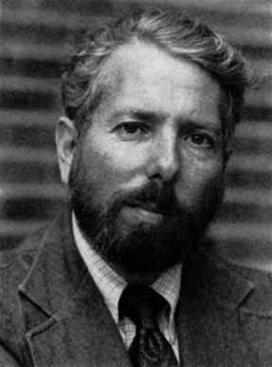

Psychology is a science that constantly surprises us as the secrets of the human soul are endless. Stanley Milgram, an American scientist of Jewish descent, tried to solve one of them. In particular, thanks to his work, the world became familiar with the theory of obedience. Read more about the genius Bronx resident on i-bronx.com.
Childhood years
According to the encyclopedia resource, the future scientist S. Milgram was born on August 15, 1933, in the Bronx, New York. It could have been an ordinary day, month and year in a large American city if the Great Depression had not gripped the United States at that time. It affected everyone’s life and work. Stanley’s parents felt it too. Their names were Samuel and Adele. They were immigrants from Eastern Europe (Romania and Hungary). They left their homes during the First World War.
In the Bronx, young Jewish entrepreneurs were engaged in baking bread, rolls, cakes, cookies and other confectionery, decorating them and solving many household issues.
Jewish history and its influence on the formation of Stanley’s character
There is a powerful bond between people in the Jewish community. It is thanks to this bond that they have been able to carry their faith, language and identity through the centuries. Stanley’s Jewish relatives, who survived the Nazi death camps, often came to their home to stay until they found their own housing and jobs. Therefore, he had the opportunity to see their concentration camp tattoos, and thus to communicate and ask them about this period of their lives.
Later, when he reached the age of majority (called a bar mitzvah among Jews), he dedicated his speech to the situation of the Jewish people. His words were about realizing that he was a part of the Jewish people, the tragic pages of their history, the suffering of their compatriots, the heritage of the people and understanding their destiny. He later wrote a letter to a friend expressing his concern that he was not born into the German-speaking Jewish community of the Czech capital, Prague, where he could have died in a gas chamber during the war like hundreds of his fellow Jews. The man also emphasized that he was born in a hospital in the Bronx and thus does not understand anyone here.

School and the first successes at this stage of life
As already mentioned, Stanley was born into a Jewish family. He had 2 other brothers and sisters. They all attended school in the Bronx. It was first an elementary school and later a high school called James Monroe. Already at that time, the teenager’s abilities were clearly visible to teachers. Therefore, he graduated from school very quickly, in 3 years.
At school, he enjoyed performing arts. In the future, this allowed Stanley to conduct his experiments with drama, realism and naturalness. While at school, the boy was a member of the Arista Society and was the editor of the school newspaper.
In 1949, at school, he sat next to Philip Zimbardo, who later became well known in the scientific community. The latter, describing his childhood and his relationship with Stanley, said that they were both thin, full of desire to change something in the world and escape from the Bronx and their neighborhood. Philip noted that his seatmate was extremely intelligent and talented. He was the one everyone turned to when they needed to ask questions or write something off.
He said that his advantages were his height, smile and ability to resolve social conflicts. Philip spent some time at North Hollywood High School, where no one was friends with him as everyone thought he was a member of the Sicilian mafia family. That’s why returning to Monroe High was a real success. He was immediately called Jimmy Monroe and became the most popular boy in the school. When he discussed this situation with Stanley, the friends decided that Philip himself had not changed but the situation had. Thus, it was this situation that had caused such a transformation in his friend’s life.
Features of studying at college and university
After graduating from high school, S. Milgram studied at Queens College (political science and performing arts). He had a desire to continue studying the same subjects but a chance changed everything. A trip to Europe, where he studied French at the Sorbonne and visited cities in France, Italy and Spain, helped him choose a different direction for his studies. After that, he fell in love with French culture and became interested in urban and social psychology.
He expressed a desire to study psychology at the Department of Social Relations at Harvard University. At first, they did not want to admit him to this specialty as he had no knowledge of the subject. Therefore, during the summer of 1954, he took psychology courses at 3 colleges in NYC and was enrolled. Here, he met the psychologist Gordon Allport, who became his supervisor. Solomon Asch, a researcher of Gestalt psychology and conformity using the laboratory method, also had a significant influence.
Stanley’s main experiment
In 1960, Stanley defended his doctoral dissertation in social psychology. All of Stanley’s subsequent research into the peculiarities of the human brain and behavior has been widely recognized by scientists. But his greatest success was his research on obedience, which was conducted while working at Yale University.
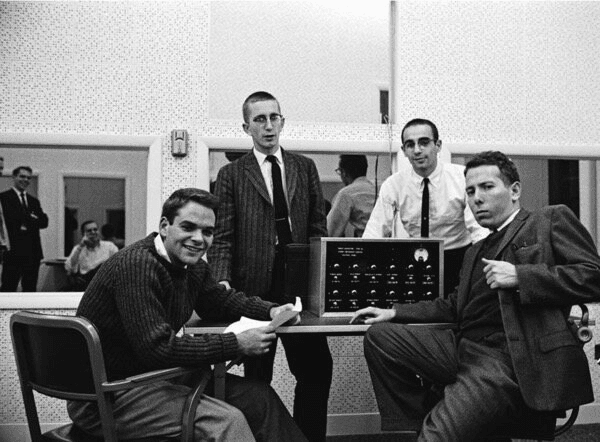
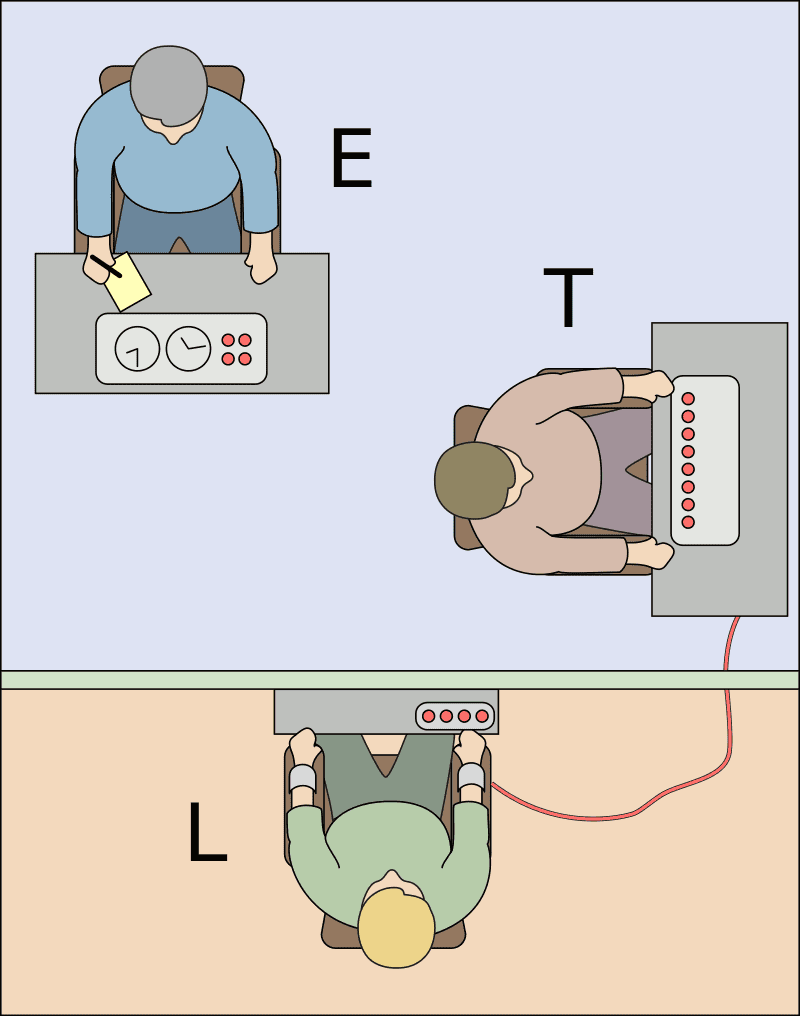
The experiment was as follows. Two subjects, taking turns, had to teach each other adjective-noun pairs. If the one being taught made a mistake, the one who taught him punished him with an electric shock of rising voltage. Each subsequent switch increased the intensity by 15 volts, from 15 to 450 volts.
The volunteer who was supposed to learn the words did not feel the electric shocks because the device was just a dummy (he gave answers that were deliberately correct and incorrect). But the one who turned on the current thought that he was carrying out the learning process. The experimenter (in this case, Stanley himself) stood next to him and ordered him to continue the experiment until it was completed.
In other words, it was a study of how a person obeyed the authorities. 60% of the subjects completed the task, even if the person being tested pretended to lose consciousness. Another conclusion was that if the distance between the experimenter and the student sitting near the current source was changed, it led to a decrease in the subjects’ obedience.
In general, S. Milgram proved that it should not be said that Nazi criminals were sadists or psychopaths when they killed Jews. They were simply people who followed the orders of others and had no animosity toward the Jewish ethnic group.
Some scientists criticized Stanley for his experiments on humans. That is why, some time after the experiment, he sent a questionnaire to all the subjects to find out about their health and well-being. 84% said they liked the experiment and were happy to take part in it. While 1.3% said they regretted their participation.

Other research and further life of the scientist
In 1963, Stanley began working at Harvard again. Here, he researched the lost letter technique. It helped to assess people’s attitudes toward each other. He also created the small world method. This method of communication aimed to prove that strangers can communicate through 6 intermediaries.
In 1967, Milgram became the head of the Department of Social Psychology at the City University of New York (CUNY). There, he studied the unwritten rules and norms of urban life (why people give up their seats on the subway, help strangers, etc.).
S. Milgram died of heart disease in 1984 at the age of 51. For the world, he remained a talented experimenter who was not afraid to cross the boundaries of what was permitted.