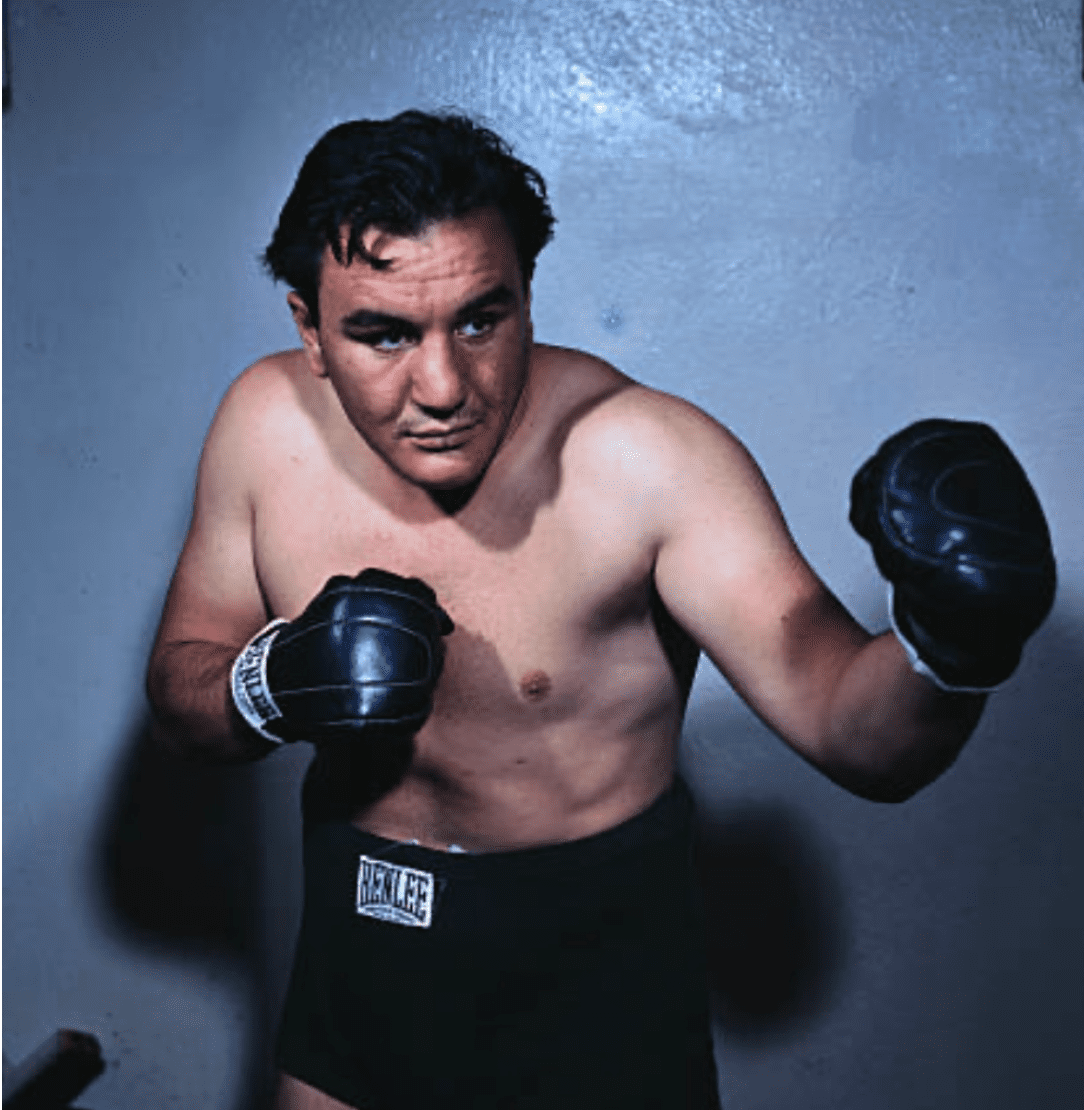

This athlete knocked out his opponents 60 times in his career. He was quite self-confident and at times impulsive. At just 23, he wasn’t afraid to challenge an experienced world champion and didn’t give up after a humiliating defeat. In this article on i-bronx, we’ll tell you about this charismatic and ambitious boxer known as the “Bronx Bartender.”
The Start of His Career
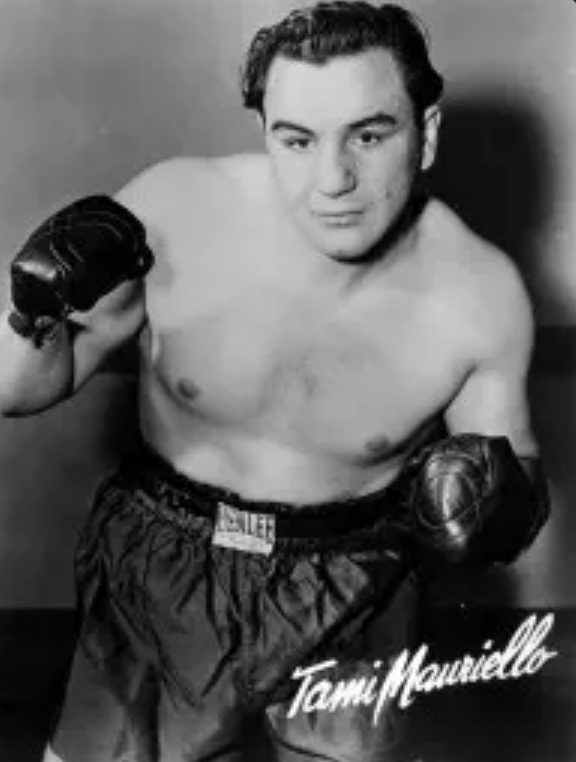
Stefano Mauriello was born on September 18, 1923, to an American family with Italian roots in the Bronx. He began his professional boxing career at 15, knocking out Gilberto Ramirez Vasquez in the first round at the Queensboro Arena in Long Island City. This was followed by a series of spectacular victories. Mauriello remained undefeated for 24 fights, 15 of which ended in a knockout by Stefano, who would later earn two nicknames: “Tami” and the “Bronx Bartender.” Many initially didn’t bet on this boxer, as there were few coaches in the Bronx who could lead athletes to great heights in boxing. Additionally, Mauriello had a serious bout with polio as a child, which left some lingering effects. But with every fight, Stefano proved that nothing is impossible for someone who is determined to pursue their dream.
For three years, Mauriello impressed with his incredible luck and boxing talent. His first loss came on January 3, 1941, in a match against future world champion Billy Soose at Madison Square Garden, where he lost by a split decision after ten rounds.
After that disappointing performance, Mauriello faced Bill McDowell just five weeks later; he couldn’t wait to fully recover, as his desire to stand on the winner’s podium again was too strong. The “Bronx Bartender” knocked out McDowell in the sixth round. Two fights later, Mauriello fought veteran Steve Belluazo, whom he knocked out in the very first round. After that, he secured several more victories against opponents like “Wildcat” O’Connor, Jimmy O’Boyne, Tony Sisco, Steve Mamakos, and Charlie Williams. Blinded by his success in the ring, Mauriello felt a burning desire to win a world championship title. Many sports analysts believe this was the biggest mistake of his career. He truly had incredible ability and talent, but he became too self-confident and ambitious too early. If he had gained a little more experience before entering the big ring, his fate might have turned out differently.
Read about another talented athlete from the Bronx by following this link.
Fighting for the Light Heavyweight Title
Stefano Mauriello agreed to fight world champion Gus Lesnevich. It took place on August 26, 1941, at Madison Square Garden. The fight was exciting, as Lesnevich was known for his aggressive style. In the first round, he knocked the young fighter from the Bronx down nine times, but Mauriello got up every time and continued the fight, making it tense and difficult by keeping his distance. In the end, one judge gave the victory to Mauriello with a score of 10-5, while the other two favored Lesnevich by a small margin, 8-7 and 8-6. Due to the ambiguous result, a rematch was organized, which took place on November 14 in the same venue. In this fight, Lesnevich clearly dominated, feeling very confident in the second, third, and eighth rounds, but he began to tire toward the end. “Tami” showed strength and character in the last three rounds, but ultimately lost by a unanimous decision with scores of 9-4-2, 9-5-1, and 10-2-3.
Transition to the Heavyweight Division
In his new heavyweight category, Mauriello fought Jimmy Bivins, who at the time held the unofficial symbolic title of “heavyweight champion of duration” because he was known for his self-sacrificing endurance in the ring. During their fight in Cleveland on September 15, 1942, Bivins won by a unanimous decision after ten rounds, having knocked Mauriello down in the very first round.
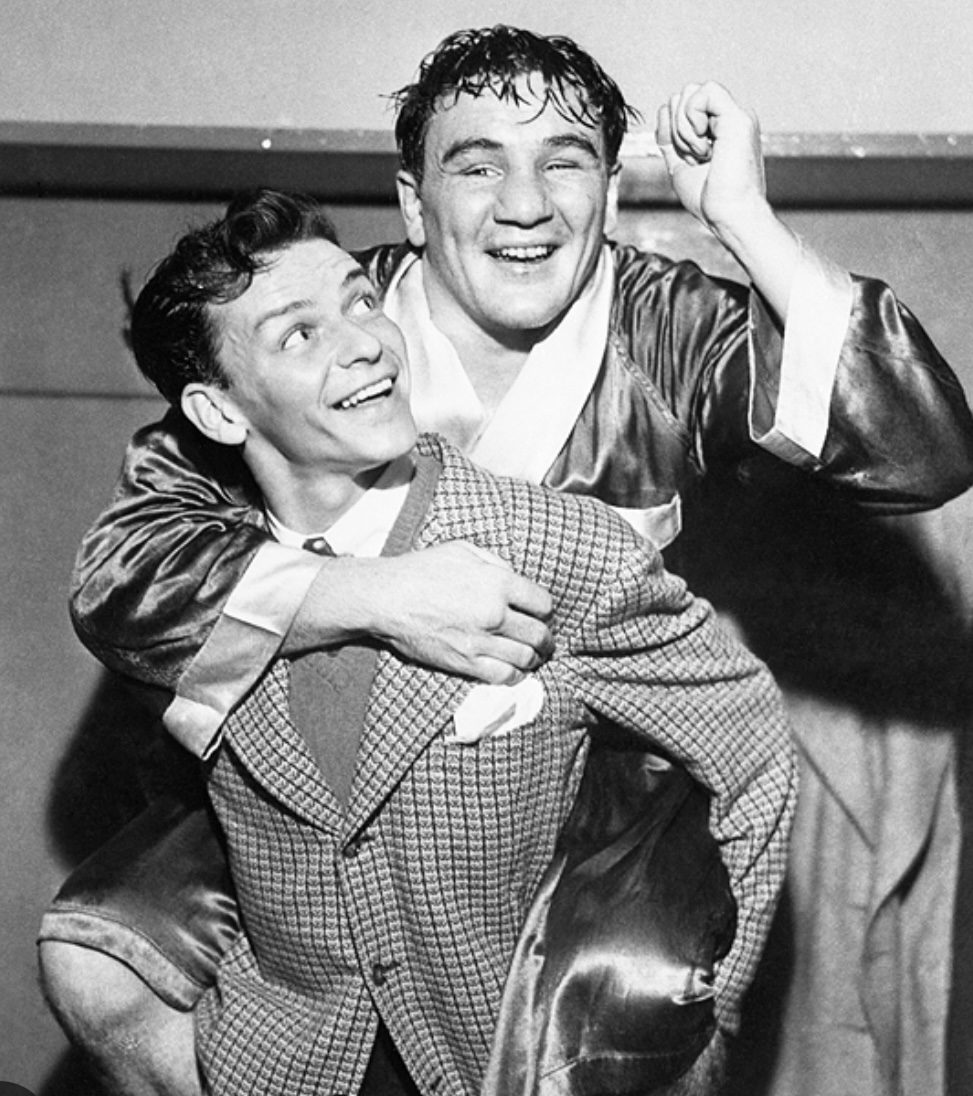
The “Bronx Bartender’s” path was far from easy. The world of professional sports turned out to be not as rosy as he had imagined, winning victory after victory at the beginning of his career.
Two rematches with Musto and Bivins ended in losses for Mauriello, and in the second fight with Bivins, he was knocked down again in the second round.
Six months later, Mauriello won against Gunnar Barlund by an eighth-round knockout and against Savold, where Stefano, although he fell in the second round, won by a unanimous decision.
This was followed by victories over Pimpinella, Knox, and Danny Cox, after which a series of three fights with Lee Oma began. In their first meeting on September 22, 1944, Mauriello won by an eighth-round knockout. In the second fight, Oma got his revenge, winning by a unanimous decision, but in the third match on March 23, 1945, Mauriello defeated Oma again.
It seemed the “Bronx Bartender” had finally mastered himself and was ready to conquer new titles. On March 22, 1946, he faced John Thomas in Detroit, where both boxers were knocked down, but Mauriello won by knockout in the third round.
On May 17, 1946, he fought British boxer Bruce Woodcock at Madison Square Garden.
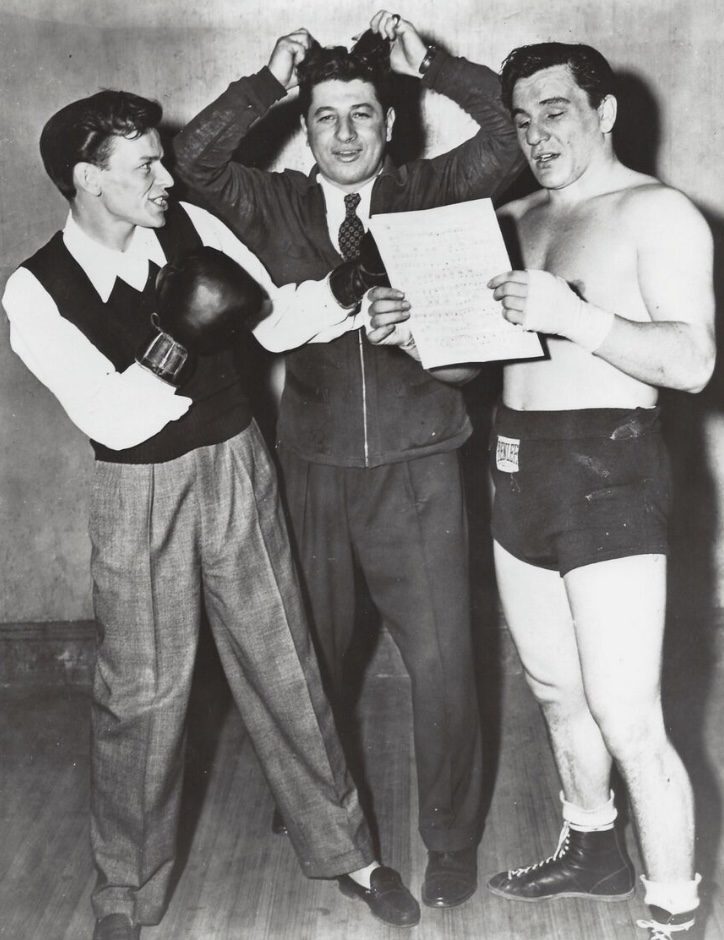
This fight was important because a chance to fight for the world heavyweight title against Joe Louis was at stake. In front of 14,000 spectators, Mauriello defeated Woodcock in the fifth round and began preparing for the biggest fight of his life.
The Fateful World Championship Fight with Joe Louis
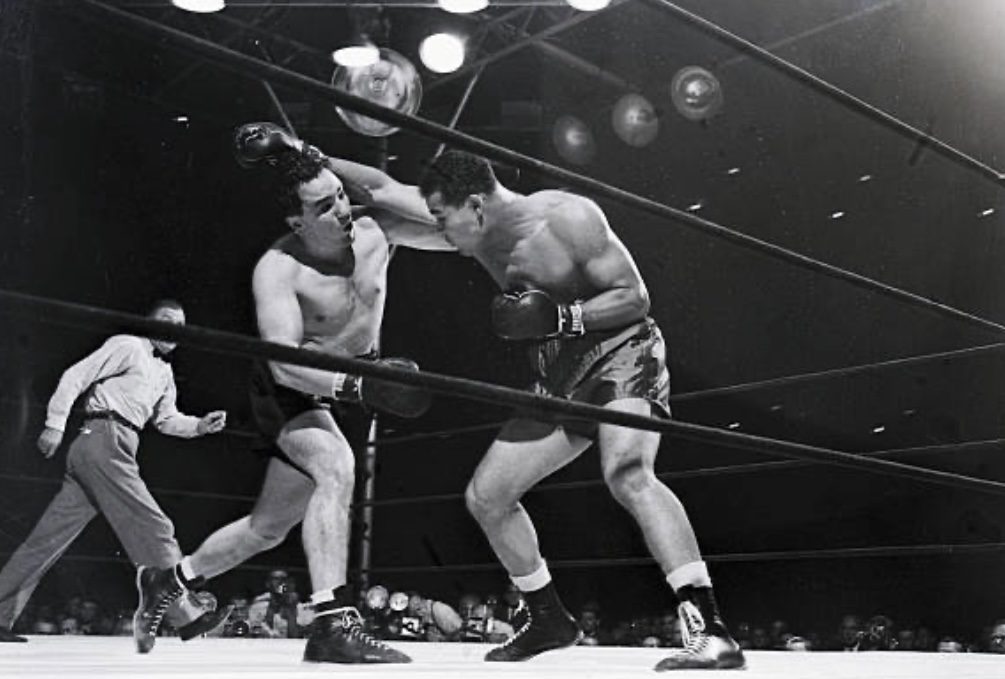
On September 18, 1946, on Mauriello’s 23rd birthday, he faced Joe Louis at Yankee Stadium in the Bronx. “The Brown Bomber” vs. “The Bronx Bartender” read the posters. 38,000 spectators gathered at the stadium, most of whom came to support the Bronx boxer. But no miracle happened…
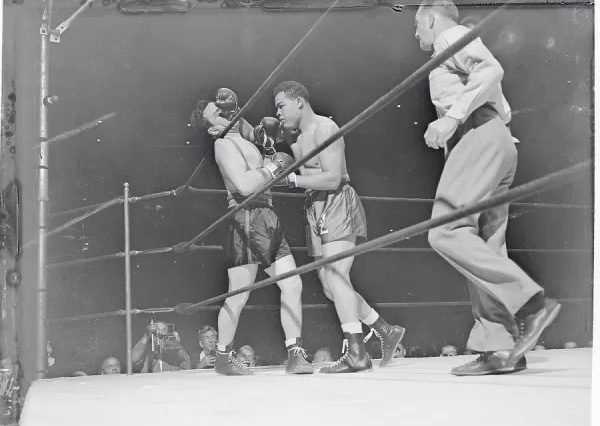
Everyone knew that Louis could be hit with a right hand—Max Schmeling had used this to his advantage in 1936. Mauriello believed that thanks to his powerful right hand, as well as Louis’s time off during the war and the champion’s age (32 at the time), he had a chance to win. Besides, Joe looked slower than the young, quick “Tami.” The fight started promisingly for Stefano. He wasn’t afraid of Louis and sent him into the ropes with a powerful right hook in the very first seconds. However, Louis quickly reacted and began to attack. He answered Mauriello’s punch and delivered a powerful left hook that sent the challenger to the canvas. Mauriello got up, but Louis continued to pressure him. After another strong punch, Mauriello found himself on his knees again, leaning against the ropes, as if accepting his fate. For the first time in his career, he couldn’t get up. The fight ended in 2 minutes and 9 seconds.
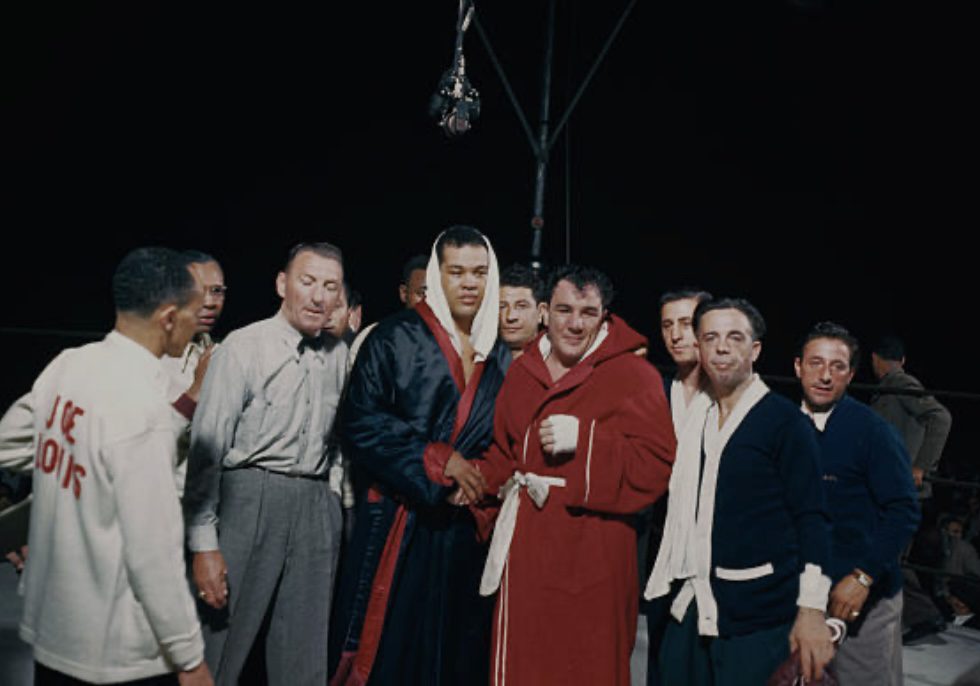
“I thought I could beat him,” Mauriello confessed to journalist Hely Talbot as tears rolled down his cheeks. “I was overconfident and got careless.”
Read about the legendary football game that was recognized as the best NFL game ever in this article.
End of His Boxing Career and the Discovery of His Acting Talent
The fight with Joe Louis was likely a turning point in Mauriello’s career. He no longer felt the same confidence and zeal. On January 8, 1947, the “Bronx Bartender” faced Jimmy O’Brien in Chicago, winning by a first-round knockout. There were two more victories and then a loss by a seventh-round technical knockout in a fight against Johnny Shkor. Furious about the stoppage, Mauriello hit one of the judges and was disqualified. At the same time, the boxer suffered a serious cut that required hospitalization and 20 stitches.
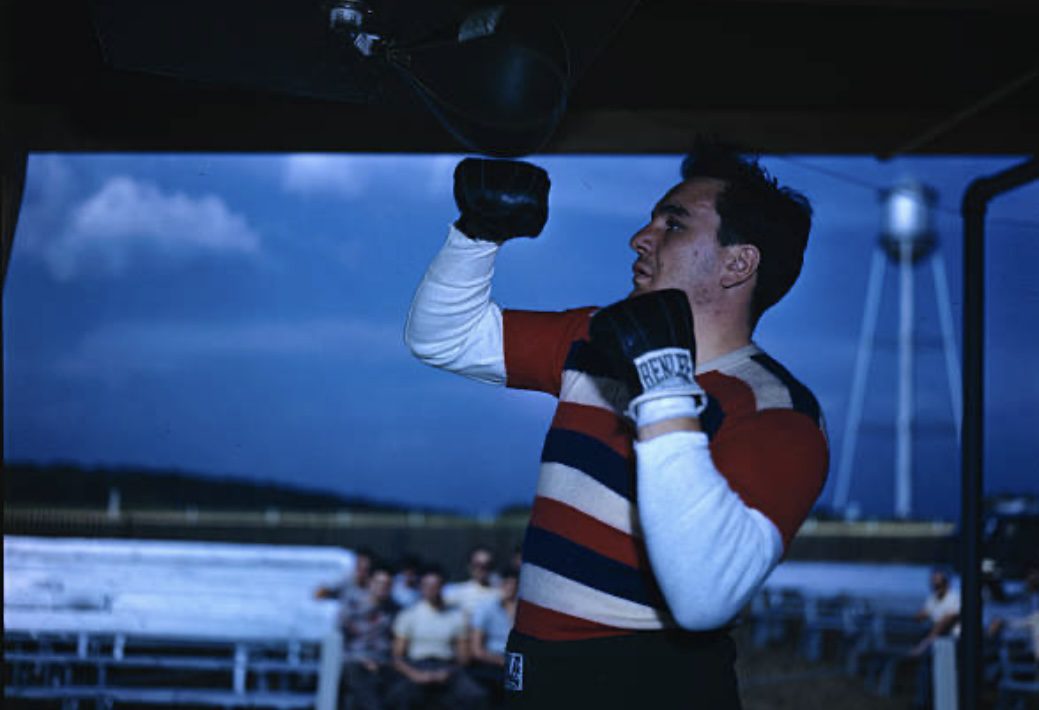
Despite the suspension, he continued to fight and, two months later, defeated Jimmy Carroll in Brooklyn. On July 30, 1947, at Madison Square Garden, Mauriello once again met Gus Lesnevich, hoping for revenge, but it was not to be. He again lost to Gus by a unanimous decision.
This was followed by a series of seven wins, including one fight abroad against Joe Dominic in Canada. Upon returning to the U.S., Mauriello had several more fights, alternating between losses and victories.
On October 5, 1949, the “Bronx Bartender” had his last fight in New York, where he was knocked out by Argentinian Cesar Silverio Brion.
In total, Mauriello’s career ended with 82 wins (60 by knockout), 13 losses, and 1 draw.
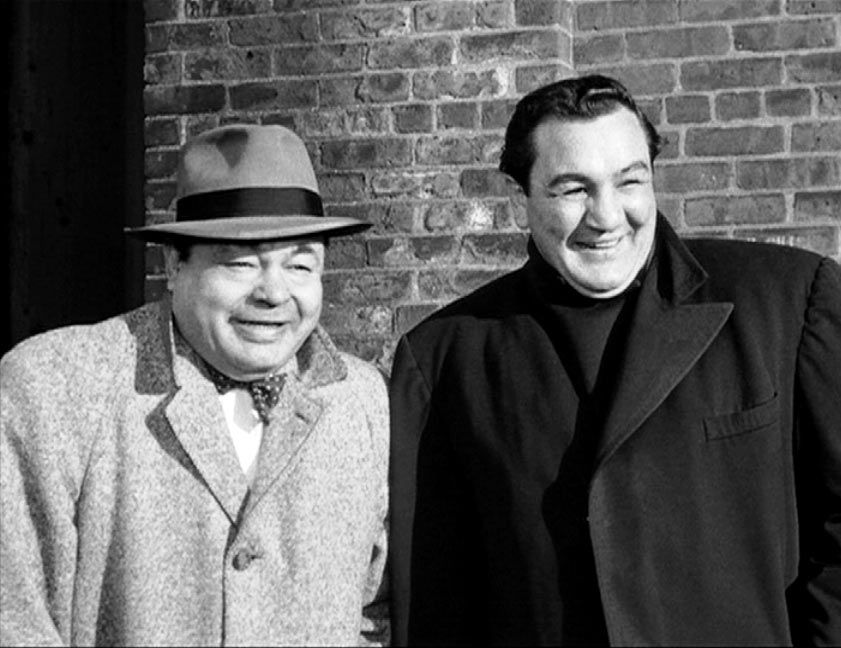
For several years, no one heard anything about the boxer, until he suddenly appeared on the silver screen in 1954. Mauriello played the character Tullio in the classic film On the Waterfront.
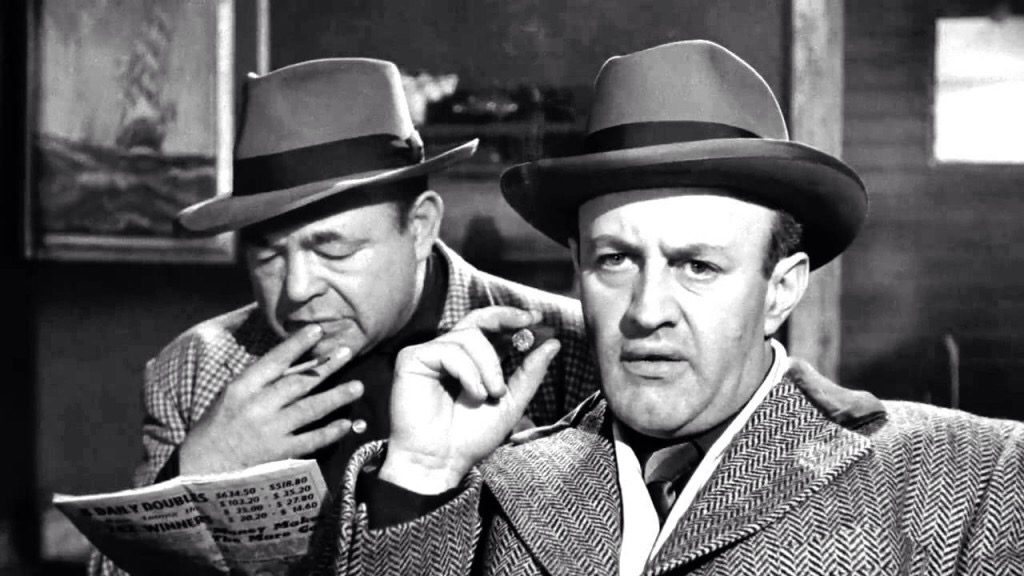
It turned out that the sturdy athlete had genuine acting skills. Although it was his only film role, even Wikipedia lists Stefano Mauriello as an American athlete and actor next to his name. Unfortunately, he was diagnosed with dementia early, but Mauriello lived to be 76 and died on December 3, 1999.