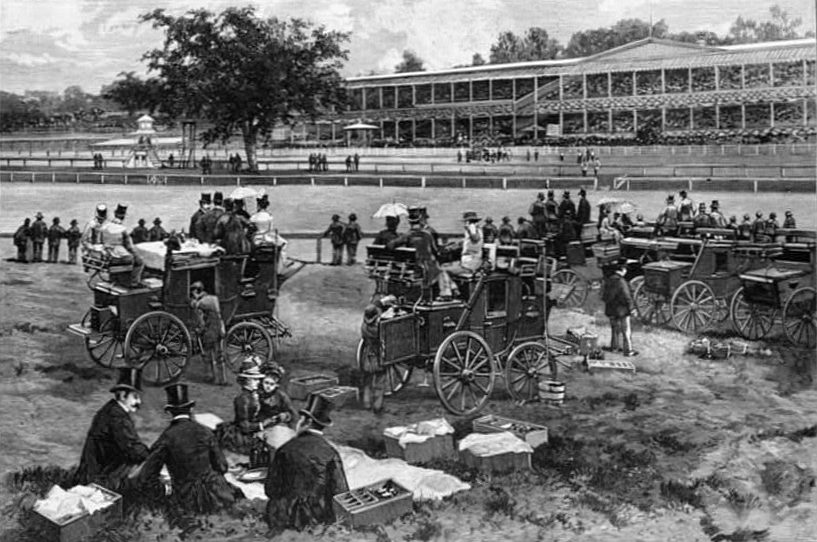

If you’re a speed enthusiast or a gambler, and you crave intense feelings, you can find everything you’re looking for at a racetrack. There are currently several of them in New York. However, there was a time when, to enjoy equestrian competitions, polo and other entertainment, wealthy city residents had to travel to Westchester County, New York, which was later renamed the Bronx. Find out more at i-bronx.com.
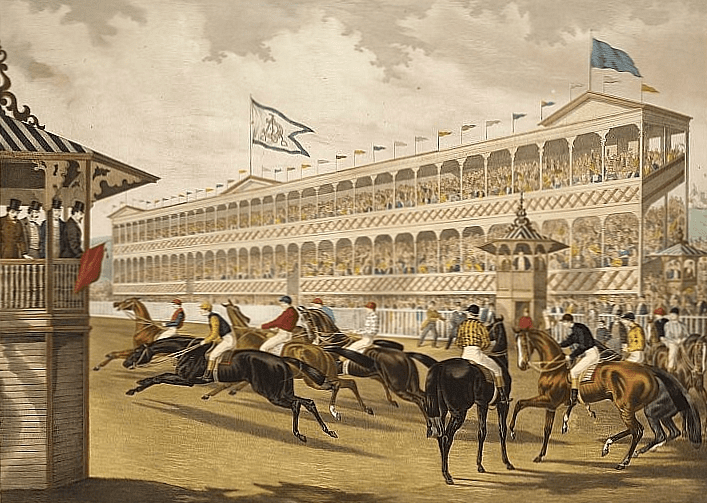
The racetrack in Westchester
According to web.archive.org, the first racetrack for thoroughbred horses was opened in 1866 in Westchester, which was then a part of New York State. The racing facility was known as Jerome Park Racetrack. Today, it is a part of the city, specifically the Jerome Park neighborhood. It is adjacent to Jerome Park Reservoir, Bedford Park and Norwood. As you may be aware, all of these areas are located in the northern Bronx.
Brief history of the racetrack in the Bronx
Soon after the opening, the racetrack became a favorite vacation destination for wealthy and gambling New Yorkers. As a result, they got here by horse, coach, carriage or railroad (Fordham Station was nearby). Over time, a separate branch of the railway was built, but it was unfortunately closed in 1894 due to the necessity to make room for the Jerome Park Reservoir. Although this place was located outside of the city for a long time (until 1874), Americans were nonetheless glad to spend their vacation in the green countryside and watch horse races.
The racecourse was situated on the Bathgate estate. It was operated by the American Jockey Club. The owners and members of this society were rich American financiers Leonard W. Jerome and August Belmont Sr. To meet the demands of the newly established facility, a clubhouse was built. It was located on a hill and named “The Bluff.”
Competitions created and held at the racetrack
Interestigly, a competition known as the Belmont Stakes was held here from the very first days of the racetrack’s existence. By the way, this is the oldest of the three races in the United States. As you might guess, it was named for one of the racetrack’s founders, August Belmont Sr. Competitions were staged at the racetrack until 1890. They were then relocated to the Morris Park Racecourse.
Furthermore, this racetrack featured Juvenile Stakes races between thoroughbred horses. The competition’s major purpose was to determine which of the 2-year-old horses was the best at the time of reaching this age. It was initially introduced in 1874. Between 1874 and 1888, it was held at Jerome Park. After that, the competition was relocated to different racetracks, and it ran for 109 years in total.
In addition, for the first time, such a competition as Champagne Stakes was held at Jerome Park Racetrack. This is a one-mile race for horses under two years old. There was also a competition called the Ladies Handicap. These were the first bet races in which 3-year-olds, and later just 4-year-old mares, may compete. This tournament was won by well-known American mares such as Miss Woodford, Shuvee, Maskette and others. Today, the races are contested at the Aqueduct Racetrack in Queens.
Interesting events from the history of the racetrack
It is widely believed among a number of historians that it was at this racetrack that a meeting, which later turned into a long-term relationship, between Lord Randolph Churchill (father of a prominent British figure, Winston Churchill) and Jerome’s daughter, Jenny Jerome, took place. Additionally, some claim that it was there that they had their first dates, which subsequently culminated in a wedding. This, however, does not correspond to reality. Specifically, Winston Churchill himself wrote that his father did not visit the United States before his marriage, but met his mother on a Russian warship in August 1873 on the Isle of Wight.
Racetrack events covered by the New York Times
Although not much is known about the events at the horse racing facility, there is still some documented information. Specifically, we are able to recount the happenings at the racetrack using the notes of a prominent American publication, the New York Times. On May 14, 1876, the newspaper reported that 12 riders, 200 spectators, as well as more than 10 visitors with privileged status, gathered at the racetrack on May 13 to attend a training session of the local Polo Club. Therefore, we may conclude that not only competitions but also training sessions aroused the interest of Americans.
On October 1, 1894, the journal reported the sad news of the completion of races at the Bronx racetrack and their transfer the next season to the hills, fields and valleys of Morris Park. This was prompted by the return of John A. Morris from Europe. According to the newspaper, the tracks at Morris Park were to be properly prepared for racing from that point forward.
Three months later, on December 30, 1894, it was announced that the racecourse would be converted into a reservoir. Its closure marked the end of the history of one of the most famous and beautiful places in America dedicated to sports.
History of Polo and the Bronx
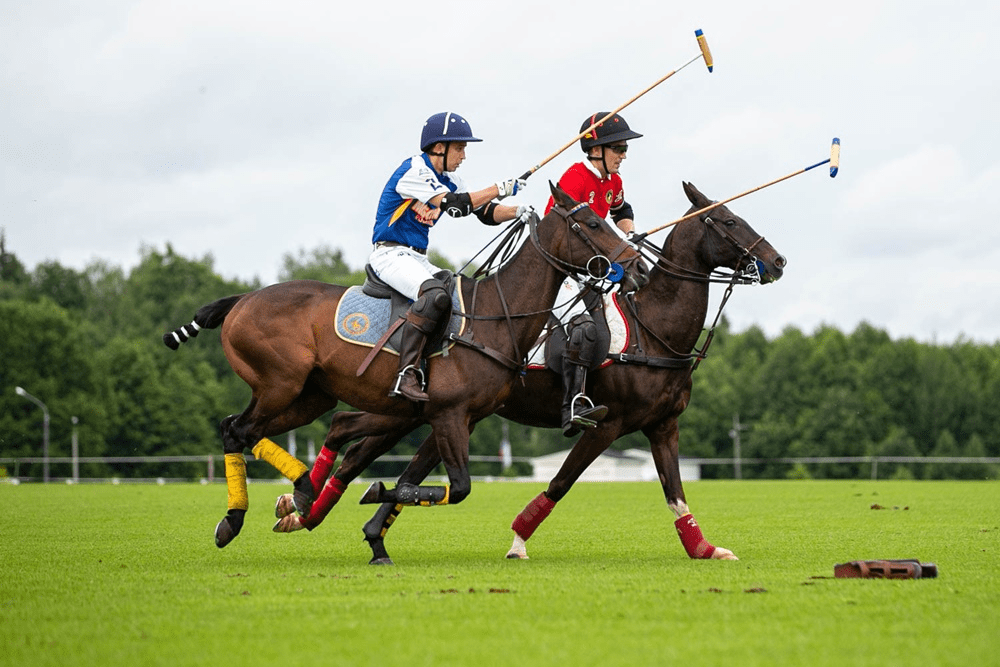
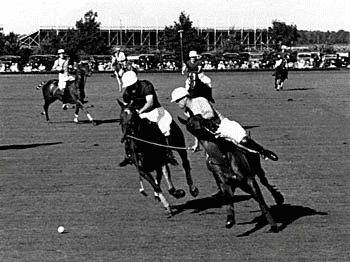
Polo was also played at the Bronx racecourse. This sport evolved in the distant past among the world’s nomadic peoples. This game helped in training cavalrymen from all over the world. There were sites for the game throughout Central Asia, especially Samarkand, where the warriors of the mighty Tamerlane trained. Thanks to the Persians (Iranians) and Mongols, the game spread through India, then Britain and then the rest of the world. The first person to die during this game was the Byzantine emperor Kantakouzenos (who ruled from 1341 to 1347). In the city of Isfahan, Shah Abbas the Great (who was in power from 1585 to 1628) built a polo field in front of his palace. It still exists and is used as a park today. It has also preserved its size, as have the original stone pillars of the gate.
The earliest written rules for the game were created by Irish captain John Watson in the middle of the nineteenth century. The so-called Hurlingham Rules, which limited the number of players to five and approved the offside rule, were established in 1874.
The first polo clubs appeared in Manipur and Calcutta in 1859 and 1863.
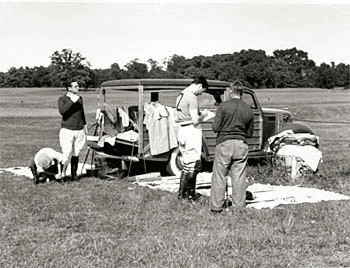
In the spring of 1876, on the grounds of the Jerome Park Racetrack, James Gordon Bennett established the Westchester Polo Club. The first outdoor match in US history was played on May 13 of the same year. Isn’t it a historic site?
Later, the local Westchester Polo Club started to alternate all of its matches between different racetracks. Some of the games were held in the Bronx, while others were held in Rhode Island. Later, Newport became the club’s home arena. The reasons for that are unknown.
The Meadowbrook Club achieved significant success in the game of polo. With its roots reaching back to 1877, this famed USA polo club is one of the most historic polo clubs in the United States. This club has competed in numerous US Open Polo Championships and Westchester Cup Championships. The Westchester Cup, in particular, drew almost 20,000 spectators on the brink of World War I (the 1913-1914 season).
As a result, Jerome Park was one of New York’s first racetracks to conduct a variety of races, training sessions and polo games. Do you enjoy horses, competitions and the thrill of betting? Share your thoughts in the comments.